If At First You Don’t Succeed

try try again. My journey back into sewing all started with an unsuccessful trip to the mall. The mass produced garments hanging on the racks, sewn out of low quality fabric, and lacking style and fit did not deserve a visit to the fitting room.  I briskly walked to my car and could not wait to arrive home because tucked away in several storage bins in my attic were options, Swiss cotton, Italian cotton, wool and silk.

It just so happened a pattern drafting Skirts class being offered at Eddie’s Quilting Bee fit my schedule. Skirts The Beginning_1

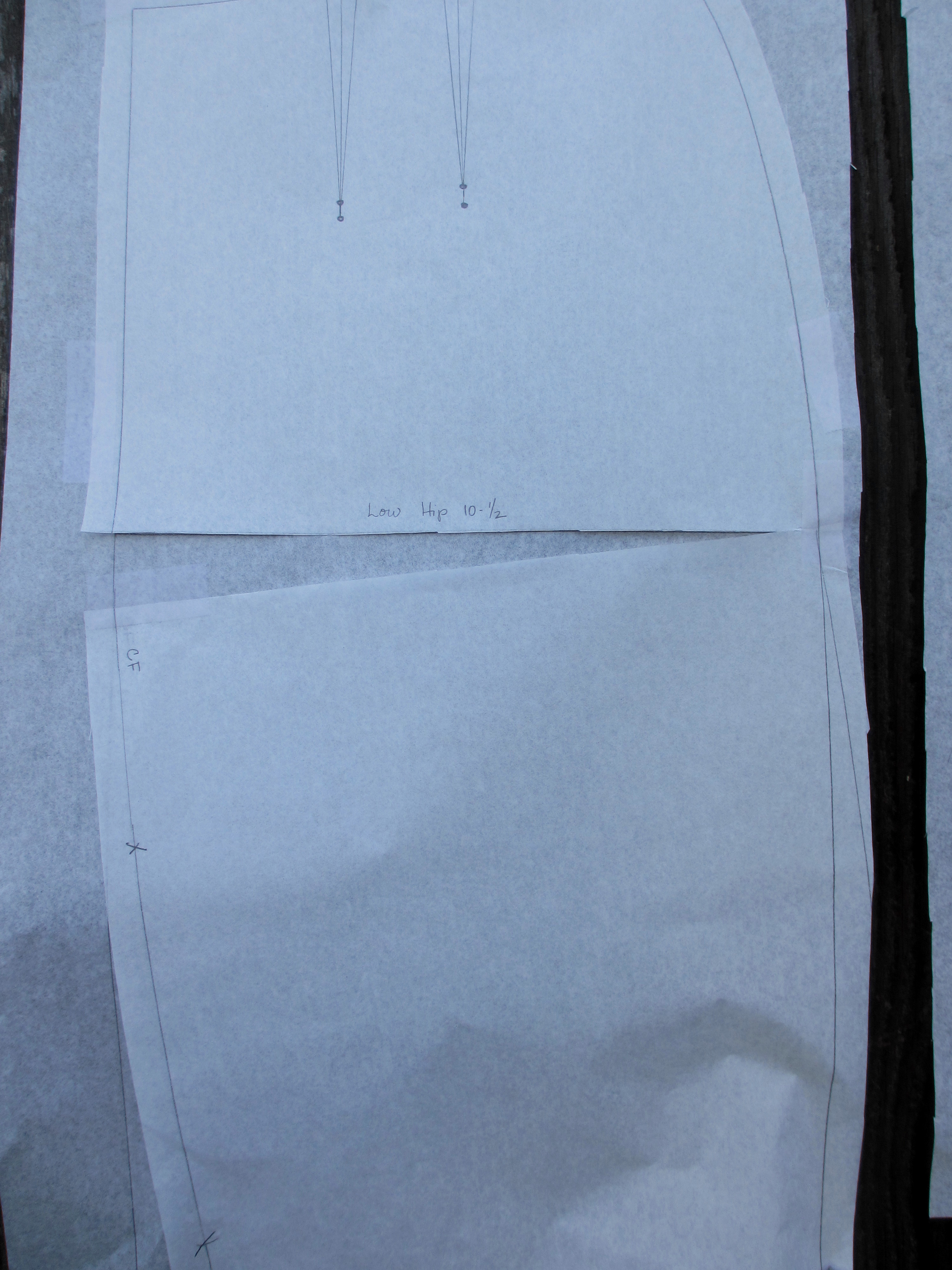
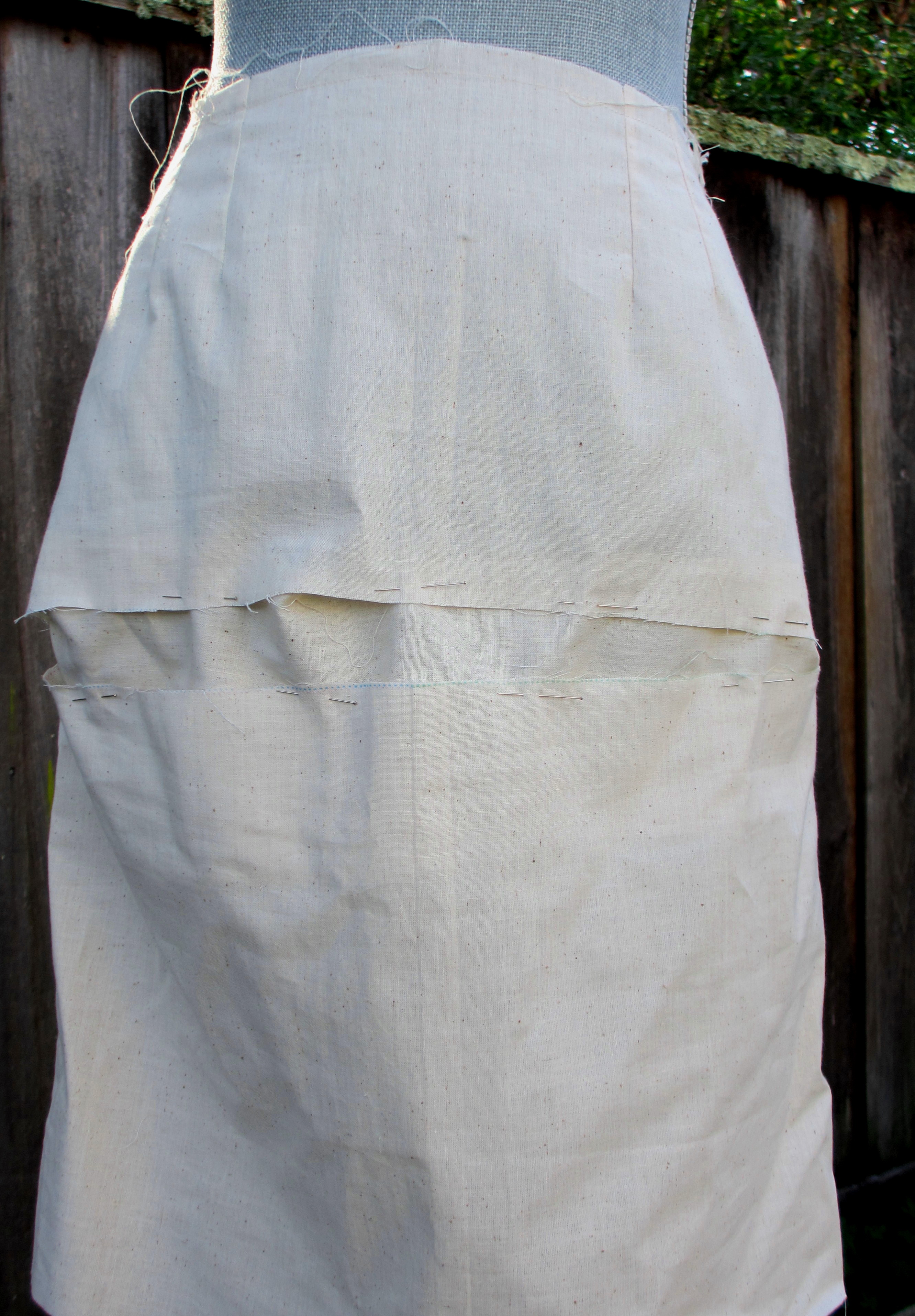
By implementing Sally-Ann’s instructions in conjunction with Nicole Smith’s, Skirt-A-Day Sewing, I drafted a skirt foundation block using my low hip measurement. Upon the completion of the skirt block, I drafted a two-dart sloper.  At this point, Sally-Ann mentioned, “Sometimes in takes three to eight muslin to reach the final draft.”  My first draft needed alteration.  After taking 2″ off the waist and 1/4″ off below the low hip, I drafted a second sloper.  The second muslin side seams pointed out that my hips tilt forward.  Sigh..Back to the drawing board.  I drafted 3/4″ off the back and added it to the front.  The third muslin did not hang even.  I have one hip higher than the other.  I proceeded to cut and pivot the front by inserting 1/2″ at the low hip measurement, and inserting  1/4″ to the back.  The fourth muslin back did not require any further alterations, but I needed to pivot the front by inserting an additional 1/2″ for a total of 1″.  The fifth muslin front and fourth muslin back are perfect… ten drafts later.  The final copy of the final sloper needs to be mounted on poster board with spray adhesive.  On to the next phase, A-Line Skirt.

Skirts_1

Skirts #3Skirts #2

More fabric …..

What a historical treasure and the fabric is beautiful.

NikkiM's avatarBuzy Day

In Hungary outside Budapest, about a 45 minute train ride on a Russian built train through the country side is a town called Szentendre. Here I found this shop that sells blue-dyed products called Kovács Kékfestő. The fabric and products that are sold here are made according to traditional methods. It was started by the Kovács family in 1878 in Hungary. Through the years each member of the family has been awarded the title of “Folk Art Master”, the workshop is situated at Kőrösi Street 9 in Tiszakécske and the equipment they use is from the turn of the century. Blue-print material is considered very ordinary in Hungary.

The original blue-dying was a cold indigo dye done in a large in-ground, dyeing tub. Since 1932 the family wrote down the instructions and it now is an indanthrene warm dye. Mária Kovás now runs the shop and she uses blue-dying…

View original post 168 more words

East Meets West

I recently discovered a free pattern offer by Noro called Reversible Scarf.  The pattern is also available in Noro’s Issue 4 Knitting Magazine.  The Reversible Scarf knit with two balls of Noro Obi on a US Size 10 circular needle in Garter Lace moves fast.  The Garter Lace pattern consists of a four round repeat.

Rnd 1 Knit

Rnd 2 Purl

Rnd 3 Knit

Rnd 4 *Yo, SKP, rep from* around

I decided to pair the Reversible Scarf with Stephen West’s Pogona from Book One.  Pogona is knit with Diakeito Dia Scene.  Diakeito is another yarn imported from Japan not easily found in Northern California.  I was first introduced to Diakeito at Stitches West by Andrea, the owner of Seaport Yarn  http://www.seaportyarn.com  located in New York’s financial district.

Much to my surprise on a recent visit to the East Bay (Berkeley, CA), I discovered a source for Diakeito.  The long color repeat of both yarns along with the textural qualities of Obi are visually interesting.

Diakeito Dia Scene CowlDiakeito and Noro Cowl

Geologic Survey

Every Thursday, my husband and I attend an exercise class with our trainer, Ella. Originally, my husband was meeting with Ella as a form of rehab after being hit by a car as a pedestrian.  As a result of a head injury, he needed to work on his memory, balance and muscle strength.  He enjoyed Ella’s class so much, I’ve been recruited  to attend with him.

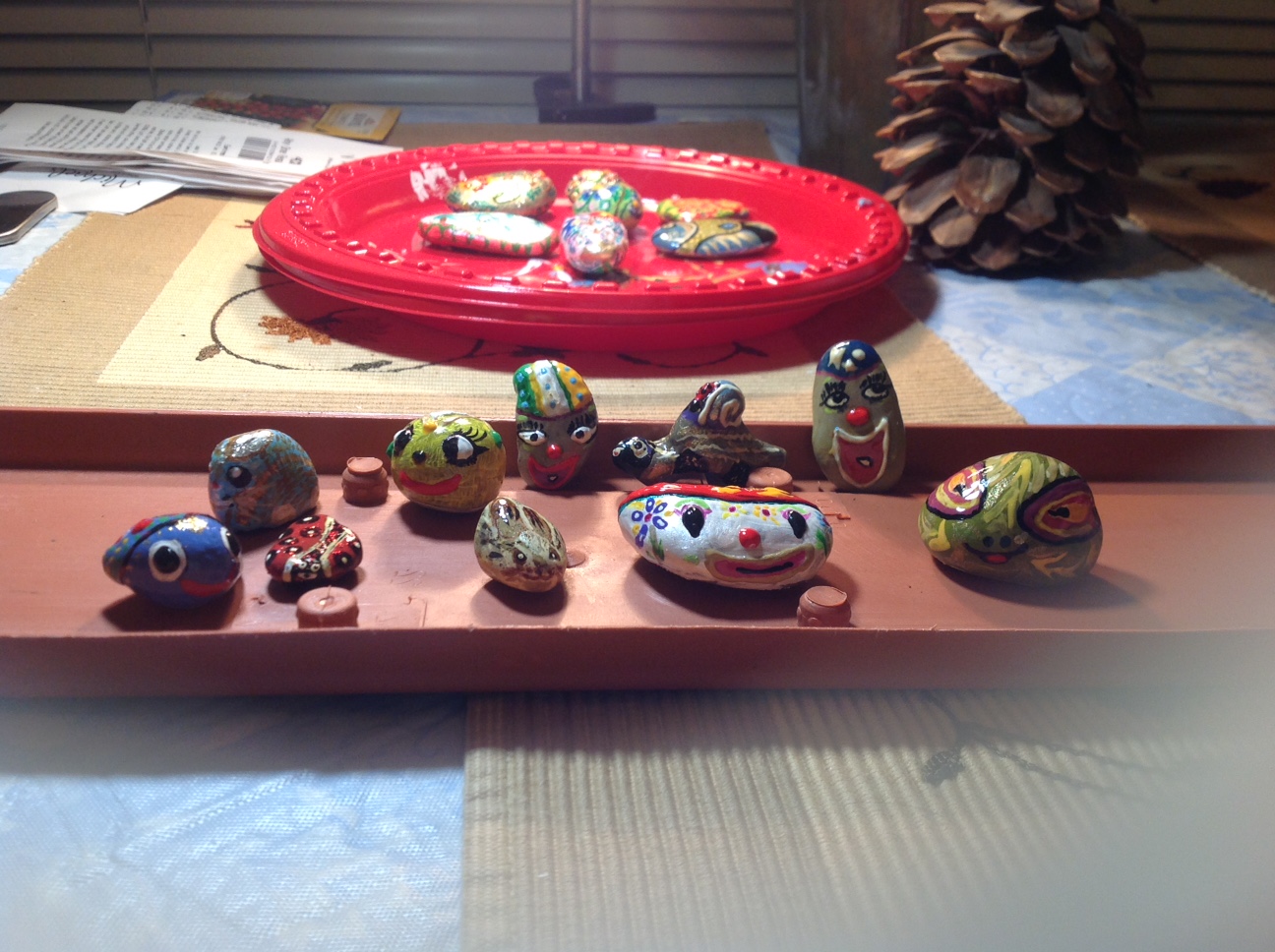
Ella trained in Russia as a gymnast and is an artist.  Ella uses geology as her canvas and each rock has its own character.   I can imagine a garden dotted with Ella’s magical geologic artwork, or a single rock perched for viewing on a desk.

Ella’s work makes me smile, especially the pine cone tree.  In a world of instant gratification, I respect the time and effort Ella spends with her art.

IMG_1034IMG_1033IMG_1035

Home For My Double Pointed Needles

curlsandq's avatarCurls and Q

DPN Holder DPN Holder

Although I prefer to use two circular needles when knitting hats or socks, there have been a few instances lately when double needles have been needed. I ordered Carbonized Patina 7″ Double Point Bamboo Knitting Needles 14 Sizes (70 Pieces) from Amazon. They are not an expensive set, but have proved to be perfect for my needs.  The problem was there were 70 pieces and I didn’t have anything to store them in. After searching the Internet, I found this tutorial on Crafty Avocado. I pulled out some of the fun knitting-themed fabrics I have and after making a few modifications, I made holders for both Curls and me.

Material Material

Materials and cuts:

  1. Main Body (Timeless Treasure Fabric; Fun-C9182) – Cut 2- 13.5″ x 10.5″
  2. Upper Pocket (Timeless Treasure Fabric; Knit-C7588) – Cut 1- 13.5″x 8″
  3. Upper Pocket lining – Cut 1- 13.5″ x 7.5″
  4. Lower Pocket – Cut…

View original post 741 more words

Around And Around

Tonight, I bound off GAP-tastic Cowl designed by Jen Geigley.  The free pattern download found on Ravelry is a favorite of many.  Two skeins of bulky weight yarn (approx. 300 yds.), US 13 needles and rounds of seed stitch builds an over sized neck adornment.

Gaptastic Cowl #2

Why not wrap GAP-tastic Cowl around your neck and brave the cold on a daily visit to your local coffee shop?


Happy New Year 2015

Recently, I received an email from WordPress detailing the stats this past year for my blog.  I originally decided to blog about my various creative endeavors with a pair of knitting needles and yarn in order to give the creative side of my life “purpose.”  Not to soon after I started blogging, I began teaching.  From teaching, I was asked to become a part of a design studio/yarn store in my local town.  So you see, stats were not on my radar.  I was hopeful that someone would find my posts interesting, but it did not matter.  I wanted a platform which would enable individuals to “see me” through my stitches.  I’ve tried to maintain a personal distance communicating only one stitch at a time because “words” are many times misinterpreted.

In retrospect, 2014 was a wonderful year.  My husband and I cruised up the Danube River for two weeks.  An experience I will forever hold close to my heart.  One morning, while cruising, I was awakened by a glow filtering through the drapes in our cabin.  I grabbed my camera and captured the sun coming up.  Perhaps we’ll see Istanbul or Paris this year.IMG_3076

I ended the year by making a new acquaintance at Eddies’s Quilting Bee in Sunnyvale, CA.  Sally-Ann Flak, a talented artist, taught a class at The Bee.  I plan on taking a pattern drafting class this month and a Moulage class in February.  Check out a picture of me wearing a scarf and holding another on Eddie’s Quilting Bee Facebook page.  I was able to finish both scarves in Sally-Ann’s class.

To all sticks-a-gogo’s friends, Facebook friends, and my friends in the real world, Happy New Year!

Mod and Marimekko

I learned how to sew before I picked up a crochet hook and a pair of knitting needles. During the 60’s, the clothing industry did not design clothes with the “chubbie” girl in mind. I was fashion conscious and my parents were dollar conscious, so my mother taught me how to sew on her Singer.  Proudly, I modeled my first sewn dress at eight years old. Flashback to the 60’s brings forward the visual memories of Twiggy’s large eyes and long eyelashes, the Mod tunic, psychedelic concert posters, and the peace sign.  A world of bold organic and geometric shapes detailed with color as bold as the design.

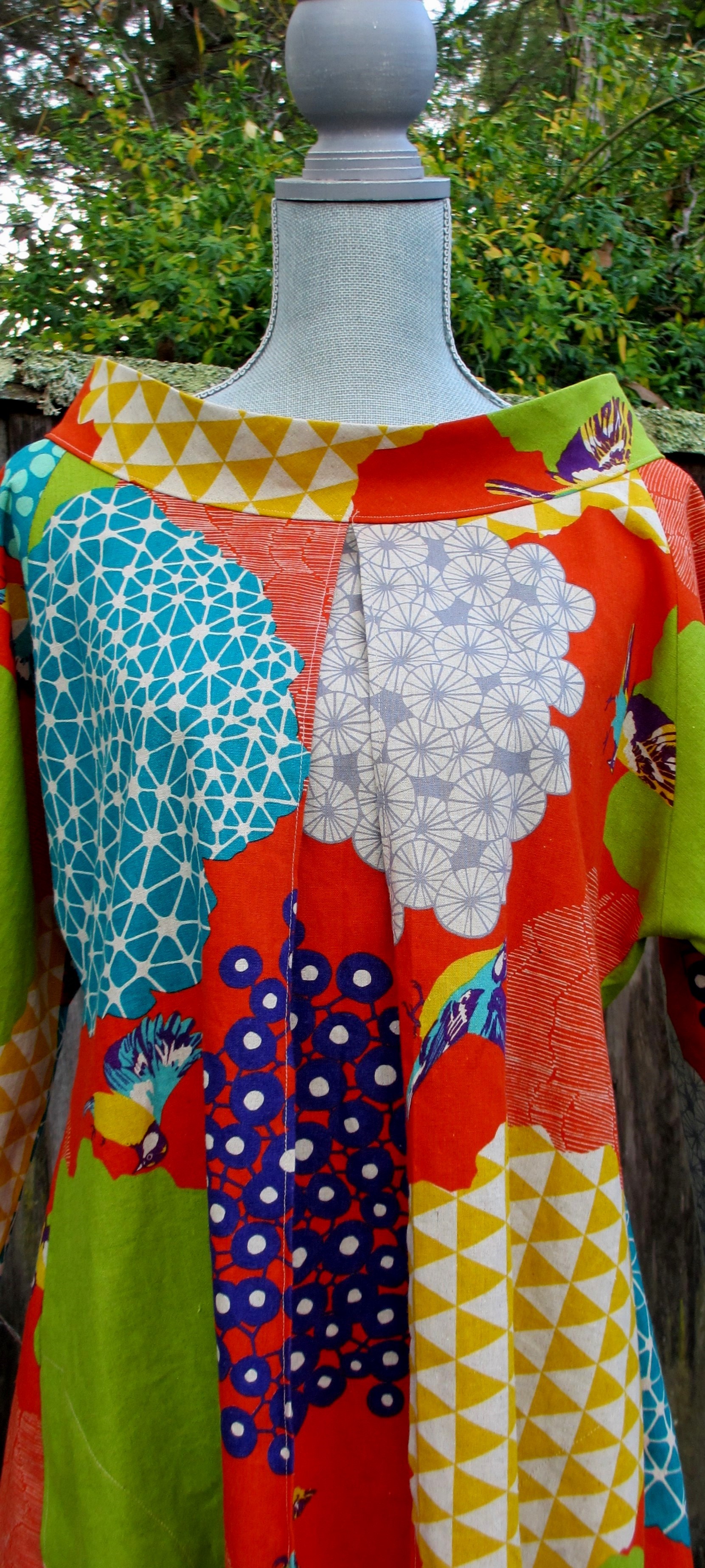
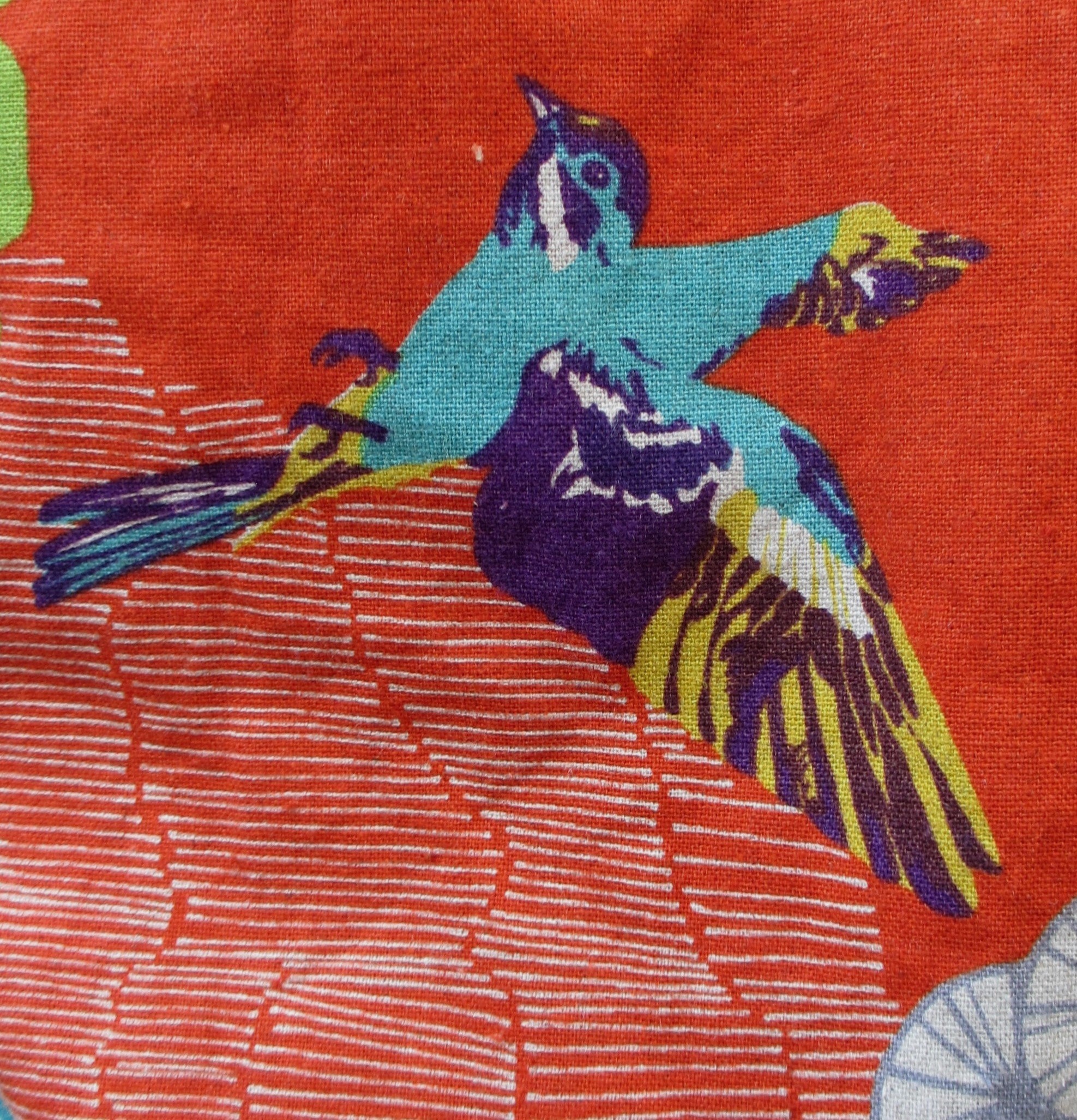
On a recent trip to Eddie’s Quilting Bee  http://www.eddiesquiltingbee.com/ in Mt. View, CA, I was drawn to the bold graphic design and color of a bolt of fabric from the collection of Etsuko Furuya.   After selecting a pattern and purchasing the fabric I cruised on down the freeway excited to dust off the cover of my sewing machine and began to sew.

Mod TunicMod Tunic #2

The more I manipulated the fabric, memories of the 60’s emerged.  I was remined of Marimekko (meaning Mary’s frock) of Finland.  Marimekko, a woman-owned company, woman-operated Finnish fabric design house that dominated fashions of the 60’s and 70’s.  The company was founded in 1951 by Armi Ratia, the wife of a failed oilcloth factory owner.  Armi had to have her husband secure a loan for her new venture because during the 60’s it was uncommon for a woman to attempt such a thing.

Jackie Kennedy chose to wear Marimekko for the U.S. Presidential Inauguration in 1960. The following website has an interesting post regarding Jackie Kennedy’s collection of Marimekko. http://irenebrination.typepad.com/irenebrination_notes_on_a/2013/01/spirit-of-a-dress-kennedys-museum.html

Jacqueline Kennedy and Marimekko


Where There’s A Will

Last week, my niece Jessica wanted to crochet a scarf for her boyfriend’s mother.  She went to her stash and found the perfect yarn, but did not have a large enough hook to accommodate the gauge of the yarn.  How did she handle such a dilemma? She looked on YouTube to learn how to hand knit.   https://www.youtube.com/watch?v=oT3gdc44Lp8

I am amazed at her instant success.  Usually, it takes a crocheter practice getting comfortable using two needles after developing muscle memory holding a hook.

Jessica and Scarf (1)

Jessica has some tips of her own before embarking on hand knitting:  Use the restroom, have a cigarette and turn off your cell phone because you won’t be able to answer.

Fantastic job Jessica!

“But It Itches!” – Part I

I hear this all the time, and I explain to the customer “wool” is not the irritant. Most of the time, it’s the processing, etc. Thanks for the information.

sweatyknitter's avatarThe Sweaty Knitter, Weaver and Devotee of Other Fiber Arts

Two years ago, I wrote a two-part post about itchy wool.  According to my WordPress statistics, it continues to receive a lot of visitors.  So I decided to repost!  Here’s the first!

______________________

I have lost track of how many (non-textile) folks who, while admiring a wool sweater I knit, sadly lament:  “Oh, I can’t wear wool; I’m allergic to it.”  (Source of pic at left)

Highly unlikely.

What’s the most common description of a person’s claimed allergy to wool?  “It itches.”  That is not an allergic reaction.  Further, there could be other factors one could be reacting to, including (but not limited to):  laundry detergent, the dye and/or mordant used to color the yarn, the chemicals used to dry clean the wool, the chemicals involved in original processing the wool, and organic matter (e.g., dust and pollen) remaining in the yarn.

With that in mind, here are allergic…

View original post 279 more words