Swimming In The Pool(ing)

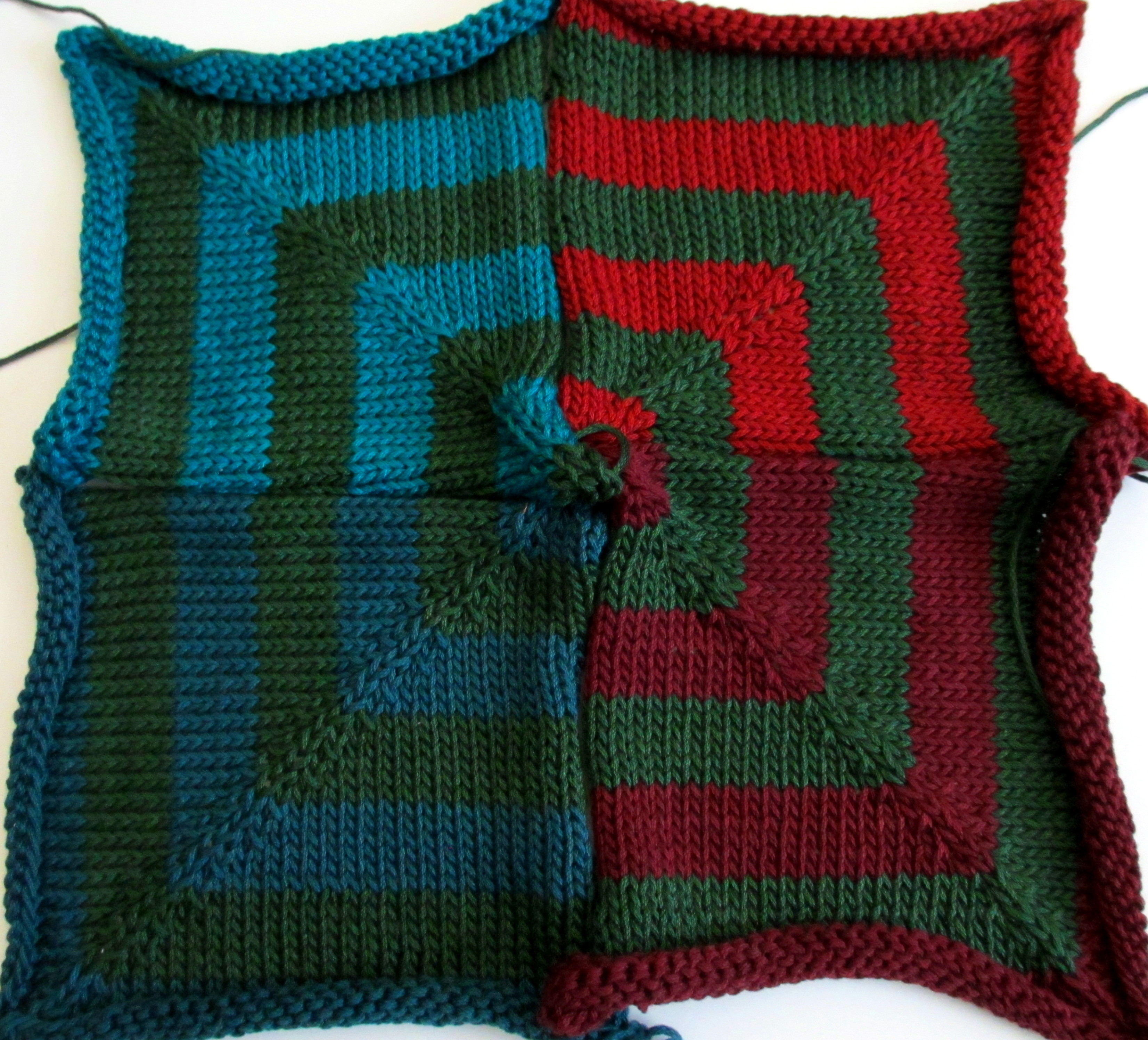
Swimming In The Pool(ing)“I’m hooked.”  I gravitate toward patterns creating design, stitches manipulating tension and the unpredictability of motifs determined by the placement color.  I am determined to manipulate yarn with a reasonable amount of preparation and a minimal amount of blood, sweat and tears.  So with that being said, I  purchased four more skeins of Craftsmart yarn in Color #15 Sangria.

Surprise!

Purl stitches change the tension of the piece, commonly referred to “uneven tension” in the knitting world.  The random puckering of the surface adds visual interest to the piece, an uneveness, “topography on purpose.”  I plan on knitting four squares, joining each square into a garment displaying a topographical relief of peaks and valleys.

Swimming In The Pool(ing) #2

Jumping Into The Pool(ing)

Organizing my yarn in plastic storage bins felt like Christmas, as I unwrapped  my collection of yarn. I found hanks, skeins and balls of color, a montage of assorted textures, thicknesses and content. A fiber salad tossed with a whirlwind of ideas needed to be prioritized, in order to make my creative thoughts a reality.

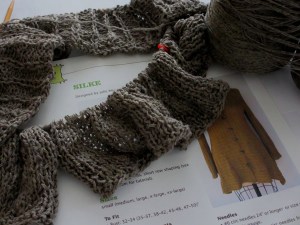
Three hanks of Schaefer Yarn,  Elaine tucked in the bottom of a bin caught my eye.  Hmmm…Sally Melville’s Einstein Coat would be perfect for this yarn. After purchasing two more hanks of Elaine, I diligently began to knit the coat.  Many garter stitch rows later, pooling reared it’s head.  Okay, so I tried to convince myself pooling wasn’t a concern of mine, until I visited my lys.  A constructive comment was made regarding the appearance of pooling and it was suggested I knit in the round to thwart the action of pooling. I decided to knit in the round with Schaefer’s Elaine and consulted http://www.ravelry.com for a pattern.

I found ravelers Karla Statnerd and Gladys Wenat, who have spent countless hours on pooling, are pooling experts proven by their projects.  Statnerd has developed a computer program which takes advantage of pooling creating beautiful argyle patterns.  Whereas Wenat lines up the color repeat of yarn manually knitting breathtaking projects.  One of the most impressive pooling projects designed by Statnerd’s computer program uses Craftsmart yarn distributed by Michaels.

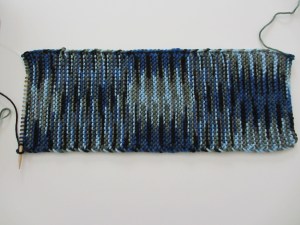
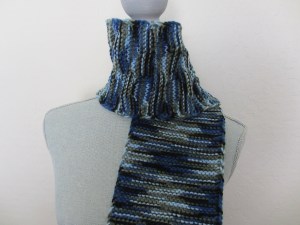
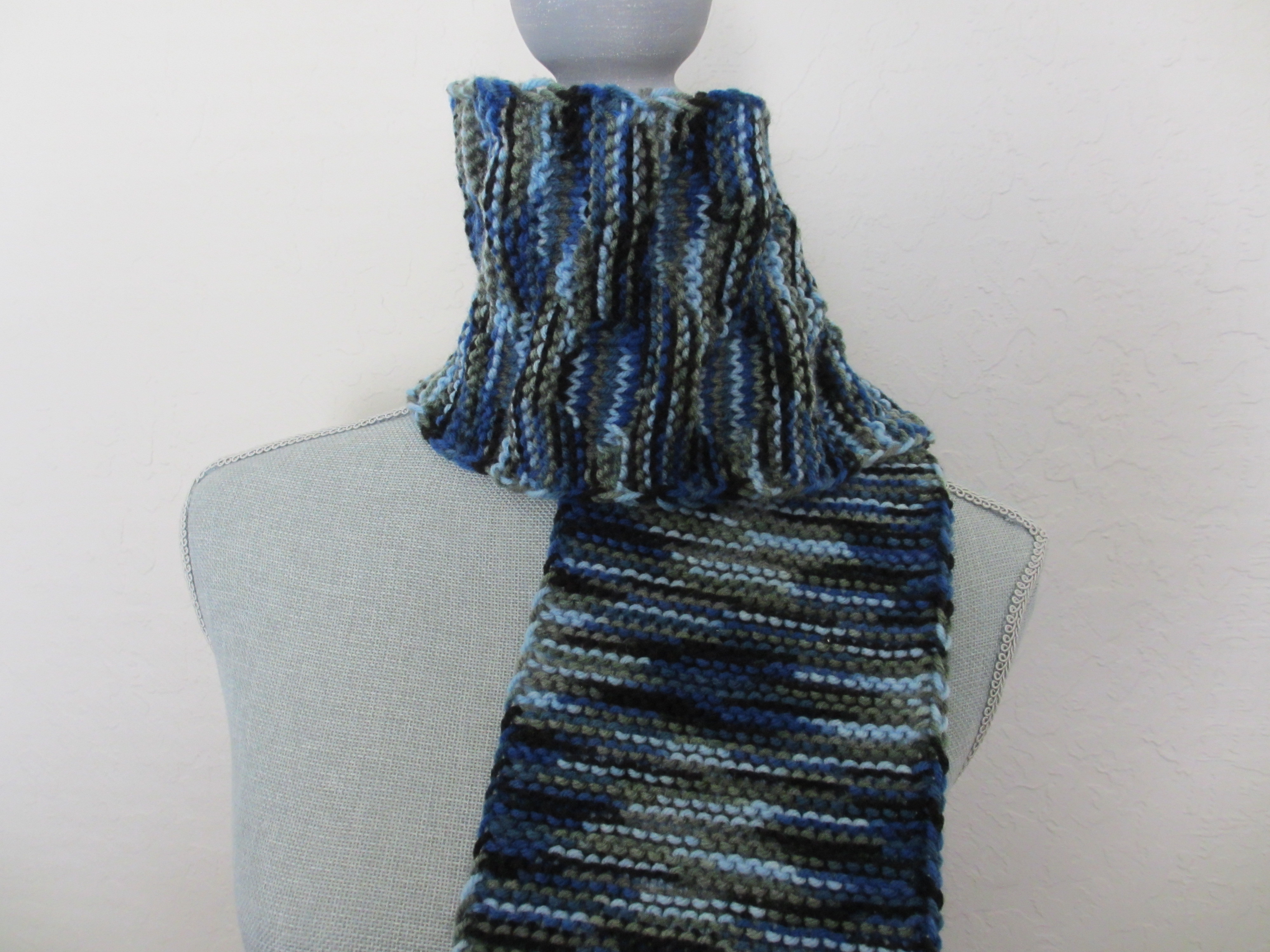
I wanted to explore both techniques, but not to the detail or attention given by these two artists/designers.  I was not after precision or perfection.  After purchasing a couple of skeins of Craftsmart yarn in Color #15 Twilight, row after row of garter stitch brought forth a motif reminiscent of IKAT weave.  After the second repeat of the motif on the scarf, I decided to isolate a color and purl the stitch, which changed the texture and patterning on the scarf.
Jumping Into The Pool(ing) 1A

IMG_1318

Jumping Into The Pool(ing) #2

Stitches West 2013

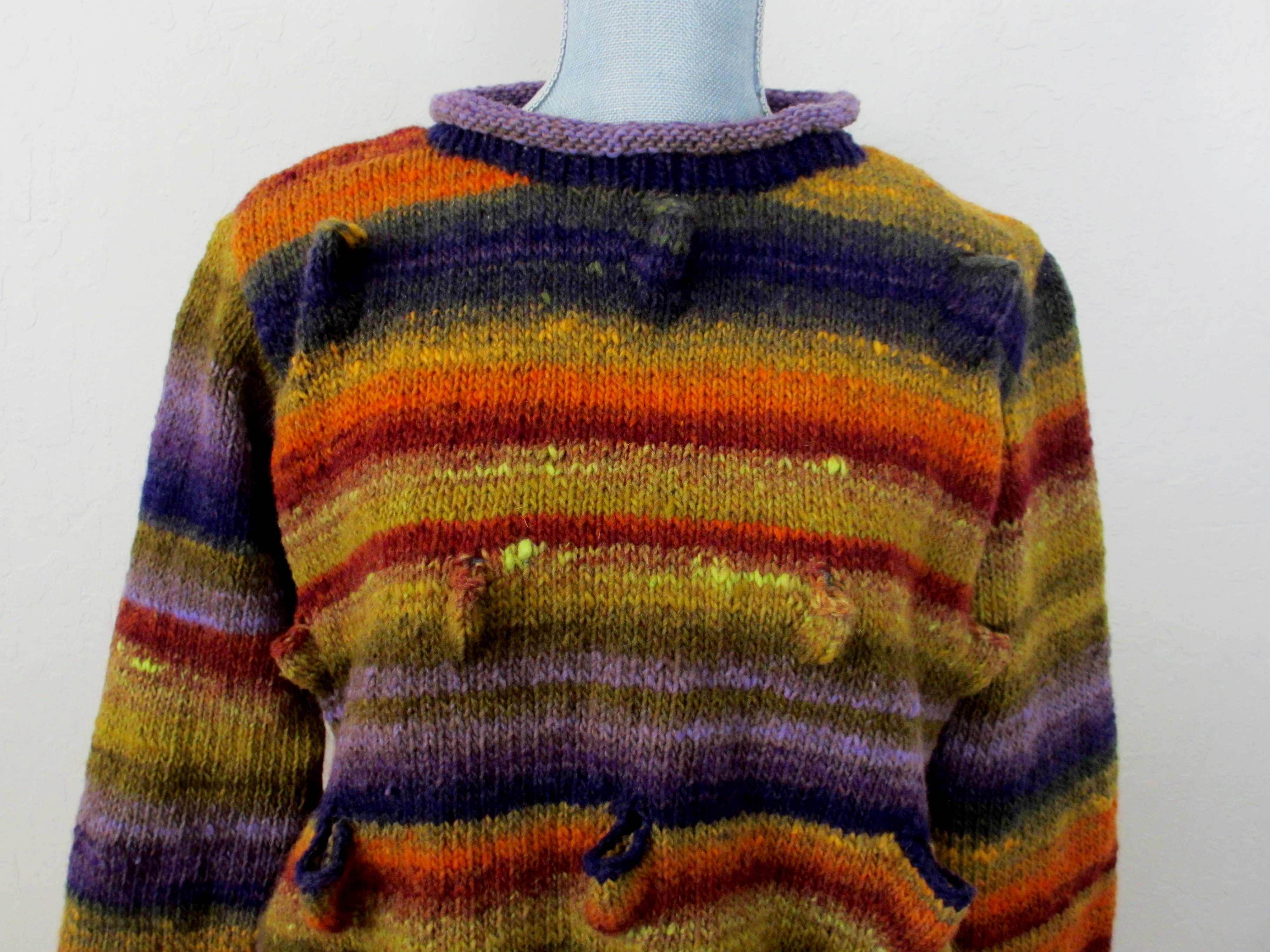
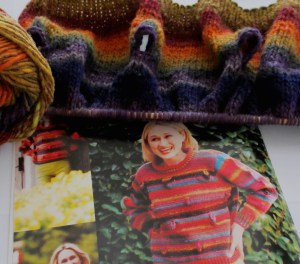
Next week, I plan on attending Stitches West 2013, wearing a new sweater knit using NORO Kuryeon Col. No. 185, Lot No. K.  The unique knitting pattern  is from NORO the World of nature, Vol. 15, Y-698.   In the process of organizing my knitting literature, I found buried treasure…Vol. 15.  I’ve kept this volume tucked away for atleast five years and was delighted to discover it all over again.   The act of casting off stitches creates pockets which render an interesting dimensionality to the surface of the sweater.  The sculptural qualities of the pattern are enhanced by the color gradations of the yarn.

I’m attracted to Japanese knitting patterns (translated) because of the visual straight forward instructions and attention to rows.   This year at Stitches West, I am looking forward to a class entitled, Understanding Japanese Knitting Patterns taught by Gayle Roehm, in order to expand my knowledge of Japanese pattern symbols.

I hope to attempt a pattern designed by Setsuko Torri, detailed in Setsuko Torii Hand Knit Works.

NORO Vol. 15 Y-698NORO Vol. 15 Y-698 #3NORO Vol. 15 Y-698 #2

Baby, It’s Cold Outside

Frost on the ground, water in the cats’ bowl frozen, and my feet are cold!  For the last two weeks, a cold weather snap from Alaska has invaded California.  The farmers’ crops are threatened and my precious plants our frostbitten.  What would I do with snow?
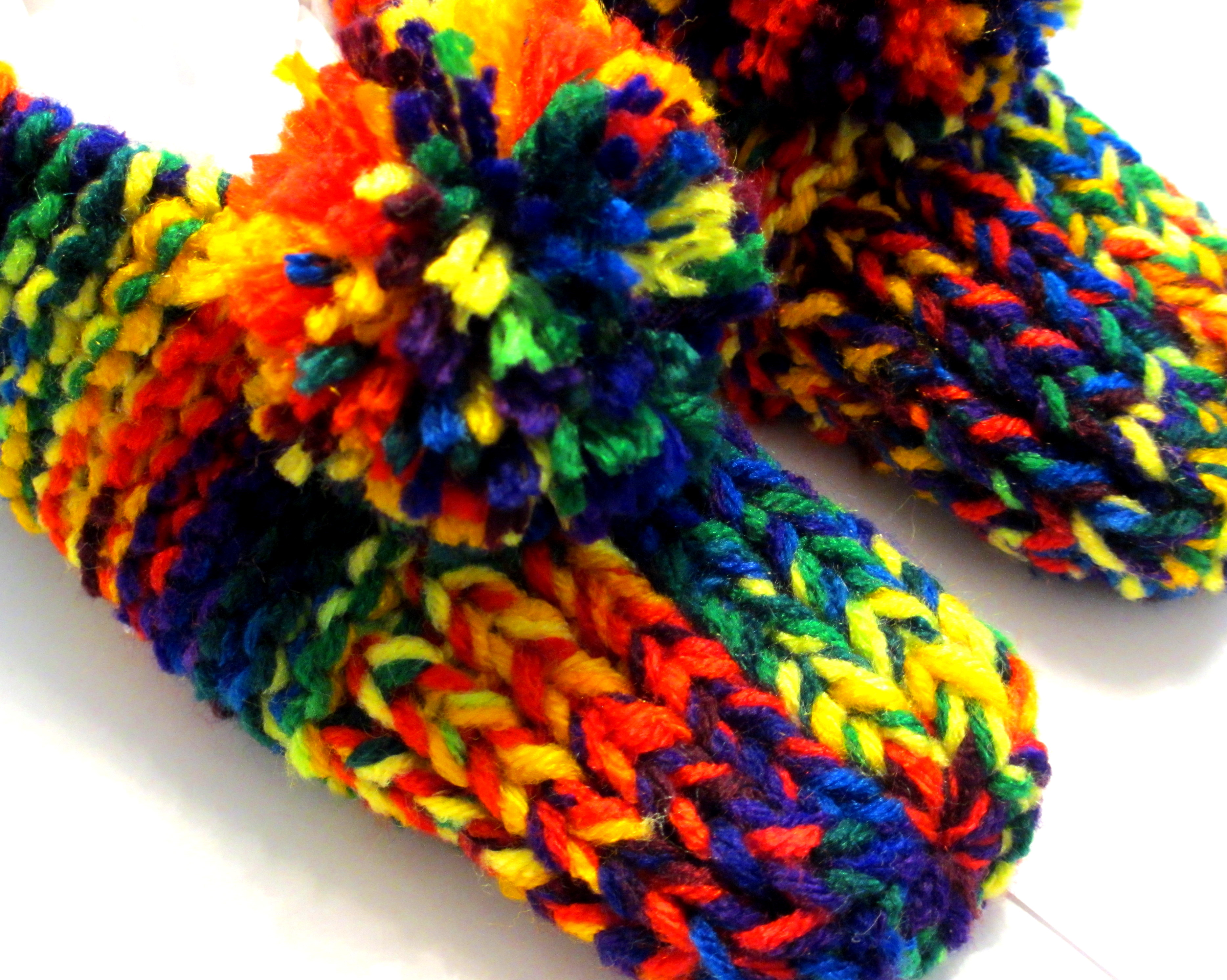
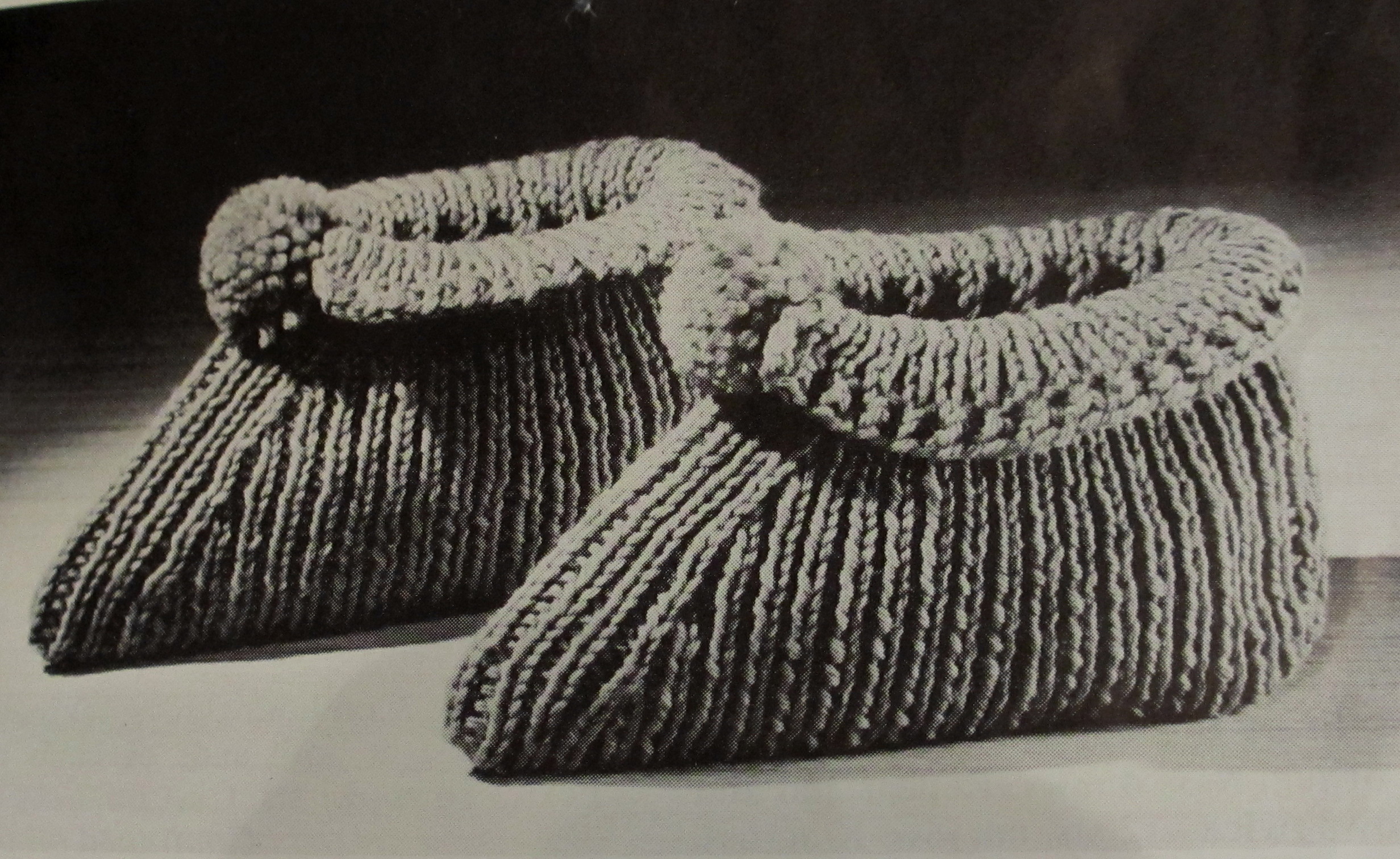
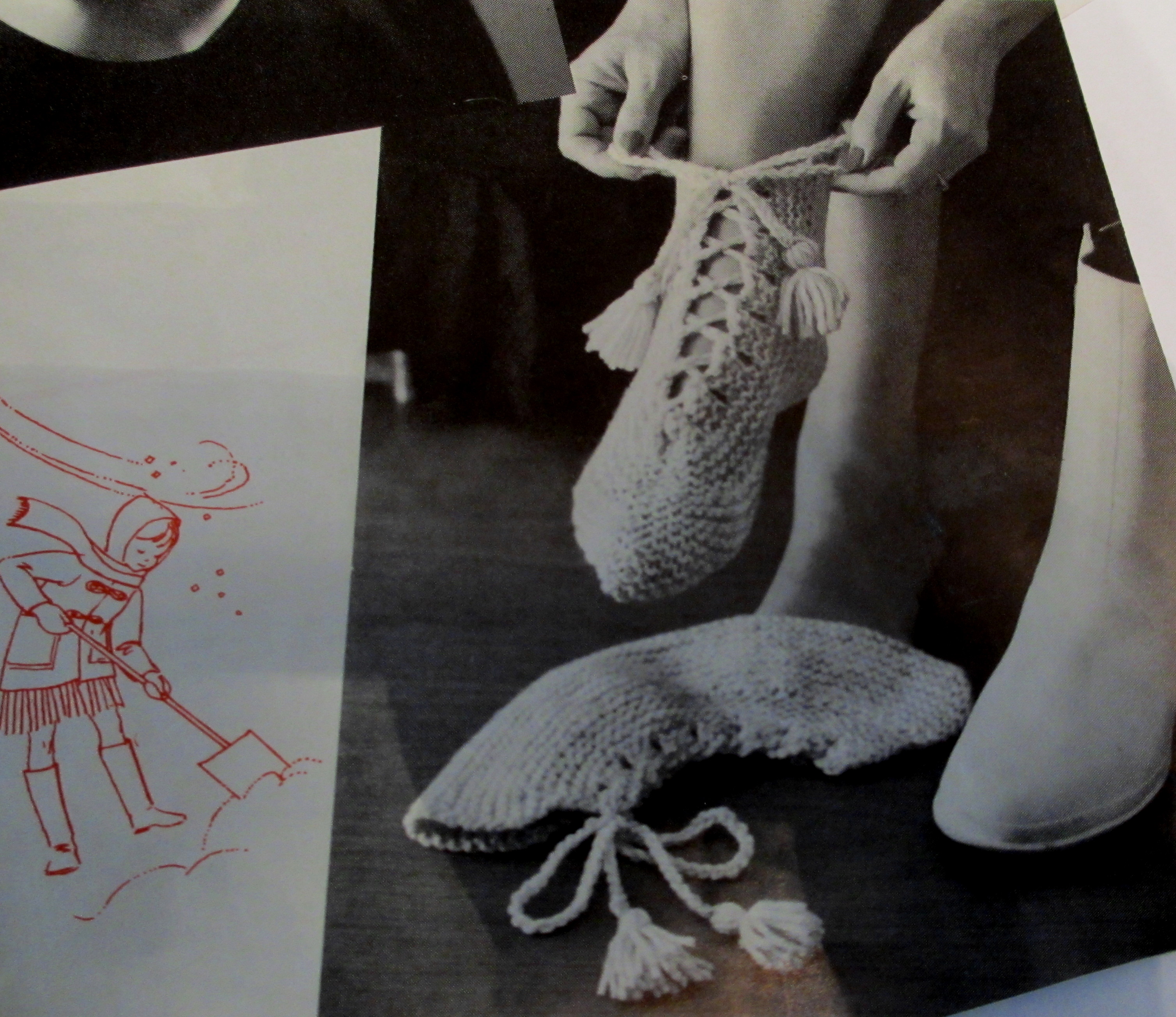
I’ve searched online catalogs for slippers and shopped at the mall and cannot find a slipper that suits my fancy.  I want a slipper for utilitarian purposes, not embellished with satin bows, a designer label or cartoon characters.   Machine wash and dryable, provide warmth and comfort are what I seek, just like the knitted slippers I received every winter as a child.  The slippers are knit with 4 ounces of worsted weight Coats & Clark’s Red Heart acrylic yarn held double, gathered at the toe and accented with a pom-pom.

I looked online for the vintage 1940s knitted slipper pattern and found something similar to what I was searching for.  At my lys, a patron wrote down a pattern for the slipper she knit while in college, but I discovered the instructions for the toe of the slipper were incomplete.  While at a recycled bookstore, I found a book published in 2004  with an adaptation of a double-knit slipper pattern reminiscent of the vintage pattern.

Well…I combined different parts of each pattern and came up with my own slipper pattern.Vintage Slipper Pattern #2

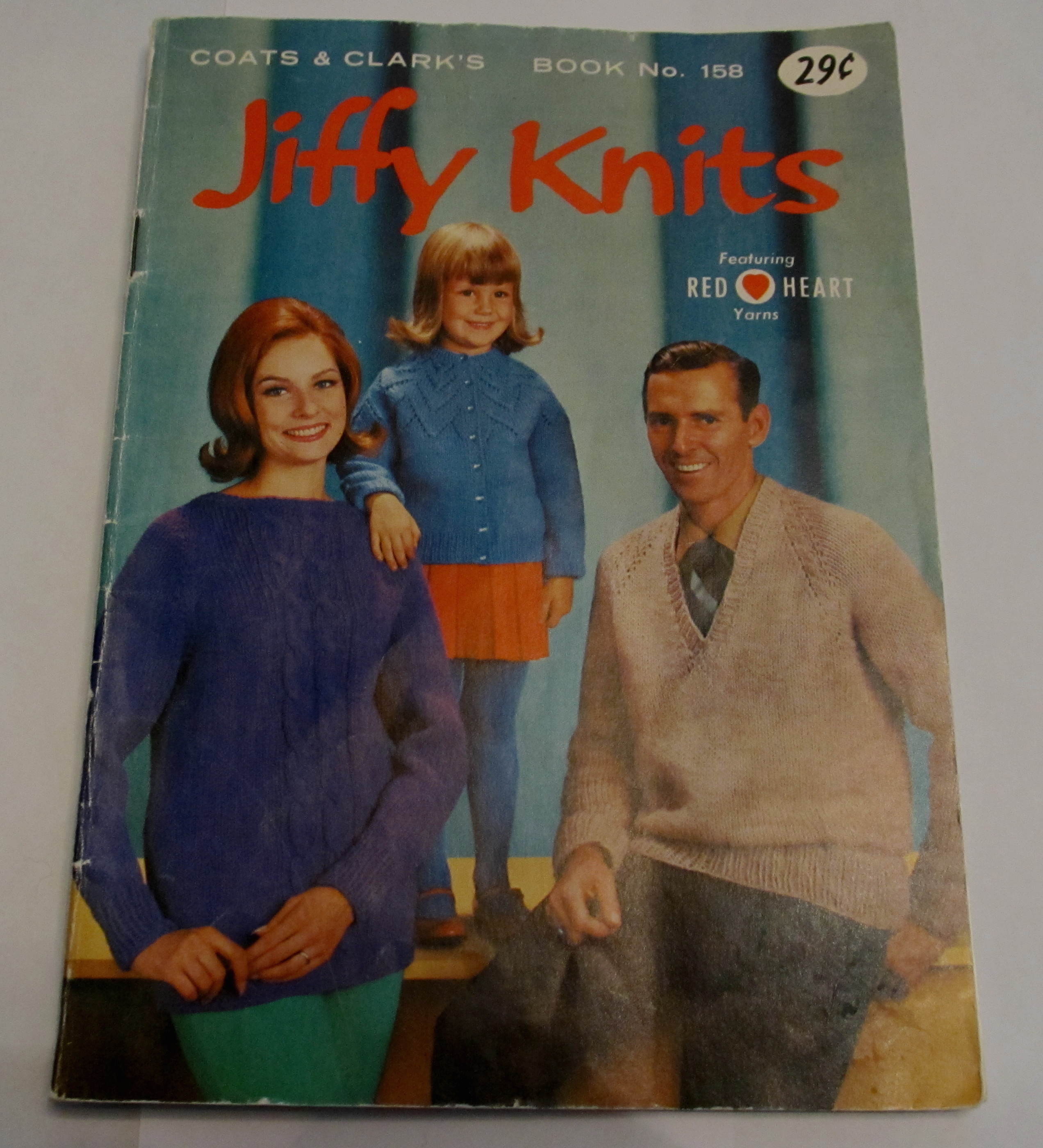
On my quest to find the pattern, I came across the following in a vintage Coats and Clark’s Book No. 158 Jiffy Knits featuring Red Heart Yarns.  I found an interesting pattern for Women’s Stretch Slippers and an amusing pattern for One Skein Book Socks.

Vintage Slipper Pattern #5

Vintage Slipper Pattern #3Vintage Slipper Pattern #4

New Year’s Resolution

In the past, I usually feel a bit melancholy when December 31st rolls around.  The thought of one year gone brings me closer to the inevitable, and you all know what I’m talking about.  Perhaps feeling a bit morose has to do with the “let down” from the adrenaline rush associated with the hustle and bustle of the holidays, excitement, food and socializing.  The “coming down” from the adrenaline high coincides with December 31st.  When the clock strikes twelve…

Instead of losing time, I am gaining months, days and years of dreaming, experimentation, exploration, and an opportunity to create, love and laugh.

New Year's Resolution #2“Without leaps of imagination, or dreaming, we lose the excitement of possibilities.  Dreaming, after all, is a form of planning.”

New Year's Resolution-Gloria Steinem

HAPPY NEW YEAR from knitorious

New Year's Resolution #3

Zig Zag Cowl

In 1953, Ottavio and Rosita Missoni founded a fashion house based in Venice.  Missoni’s designs are highlighted by the use of stripes, geometrics and abstract florals.  The use of bold geometrics are also present in woven Navajo blankets, especially the zig zag.  I wonder if  the bold geometric designs of Navajo blankets influenced their designs? Or perhaps the visual art style of Art Deco, which first appeared in France during the 1920s.Missoni #2

Misson #5 Navajo BlanketDuring the 1970s, rectilinear symmetricality of the zig zag/chevron pattern defined Missoni knitwear, and at the same time Wrigley gum wrappers were folded and constructed to create individual chevron links to form a gum wrapper chain.

gum wrapper chainActually, I went looking for gum wrappers  in the vintage size pictured in the image on the right, and could not find them. I did find a site that uses wrapping paper instead. If you’re so inclined take a look at the following site.  ttp://weefolkart.com/?q=node/308

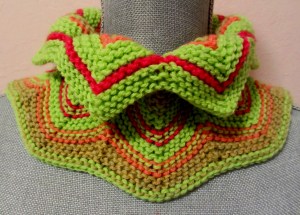
This brings me to the reason for this post…I am attracted to the symmetricality and linear qualities of the Missoni-esque style and contemplate why?  Perhaps it’s because I spent many hours folding gum wrappers.  Today, I use yarn and knitting needles to make tangible my creative ideas.

Art Deco CowlArt Deco Cowl #2

Freeform Buttony

I am attracted to freeform knitting and crochet because there are no boundaries that restrain my creativity.  Upcycling the traditional art of knitting and/or crochet based on ideas of my own, generates something unique.  Sylvia Cosh and James Walters, authors of The Crochet Workbook believe, “free means to escape from the restrictions we all unknowingly impose upon ourselves through blind habit, which programmes our thoughts and responses so that they become automatic and so involuntary.”

After taking a class from Prudence Mapstone in December 2003, I purchased two of her books for reference and a soft plastic mesh foundation for a handbag.  Recently, I discovered an eclectic mix of handbags decorated with freeform knitted or crocheted fabric of color, texture and shape found in Never Too Many Handbags, by Prudence Mapstone.  The second book, Freeform: Serendipitous Design Techniques for Knitting & Crochet is a comprehensive guide for this artform.

Why not incorporate the circular shape of Dorset Buttons with the organic shapes of freeform knitting and crochet?  The traditional method used as a fastener becomes an addition to freeform fabric.  I’ve escaped from the restrictions of Dorset buttony and created my own look.  I can’t predict the outcome of this project, but will continue to post my progress.

Noro

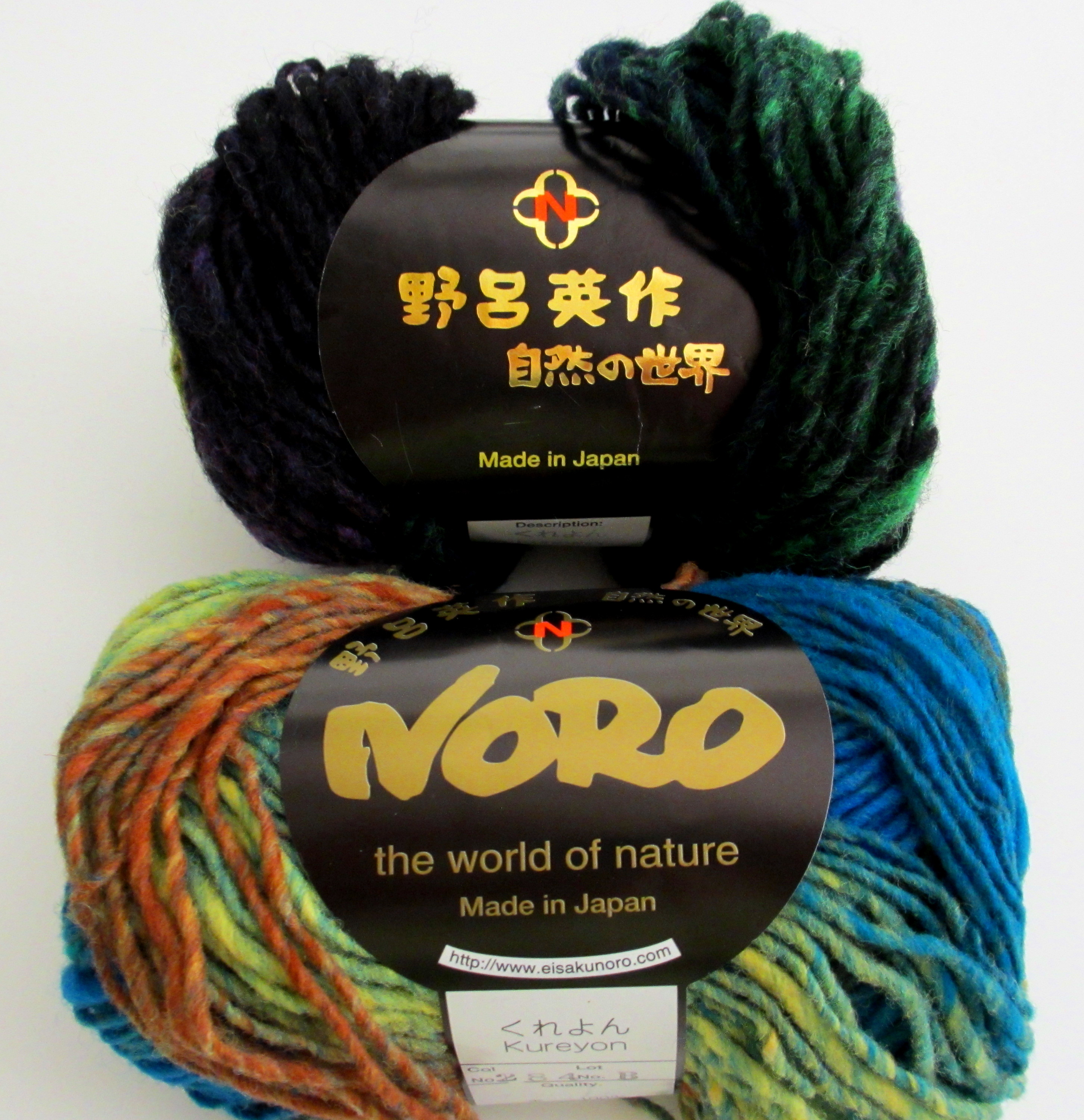
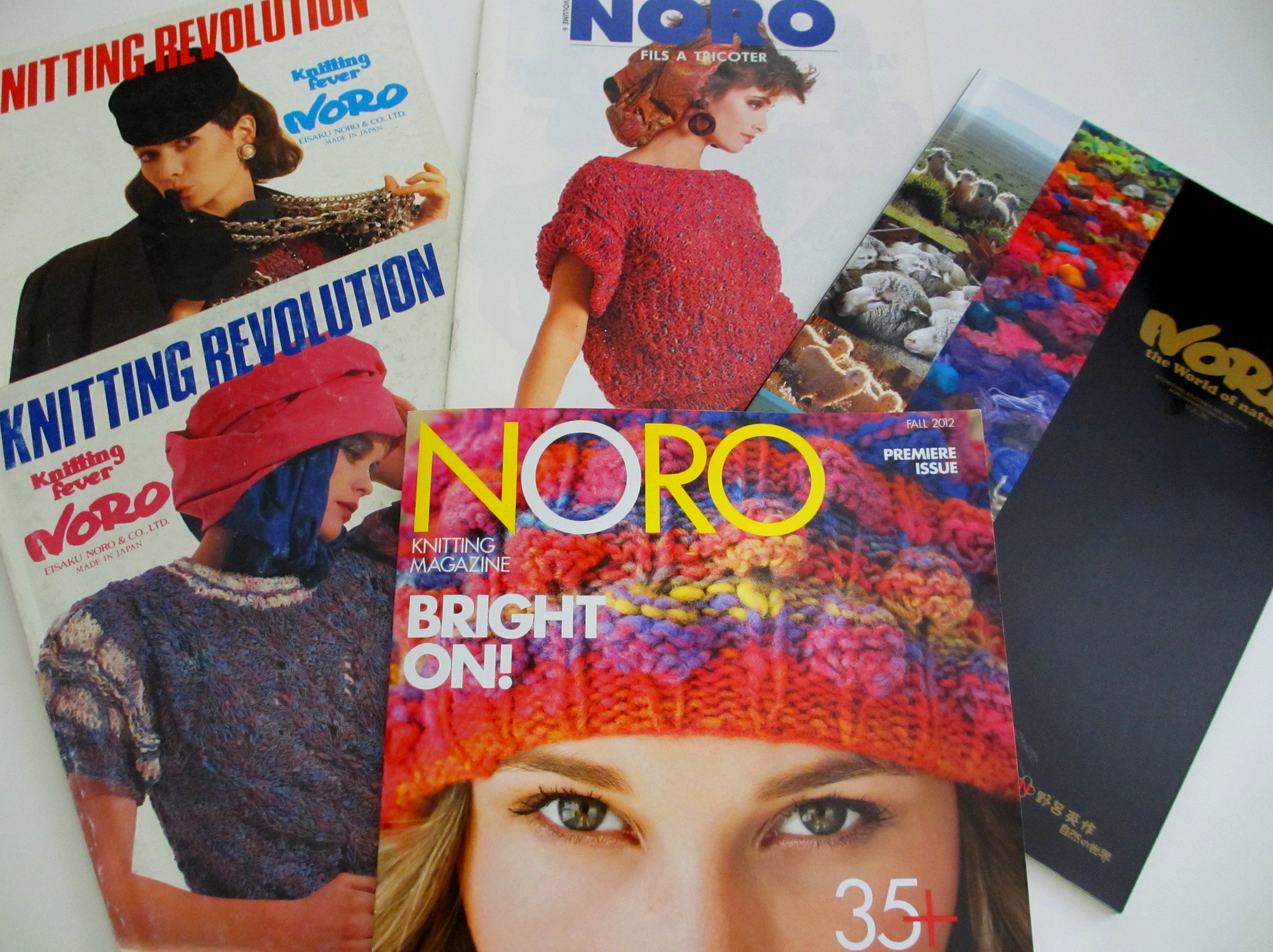
My love affair with Noro began in the late 1980s.  The first time I held a skein of Eisaku Noro’s Kureyon, my eyes were opened to his “world of nature.”  An undefinable palatte of unlikely color combinations speaks to his philosophy about the purity and preservation of nature   A recent article written by Cornelia Tuttle Hamilton in the premiere issue of NORO Knitting Magazine published by SoHo Publishing Company mentions, “by specially adapting industrial carding and spinning machines, Noro was able to produce yarns that were totally unique and that put much less strain on the environment than usual in the industry.”  “The yarns were very colorful and ahead of their time, and they were not easy to sell.  They were deemed by many as unsellable.”

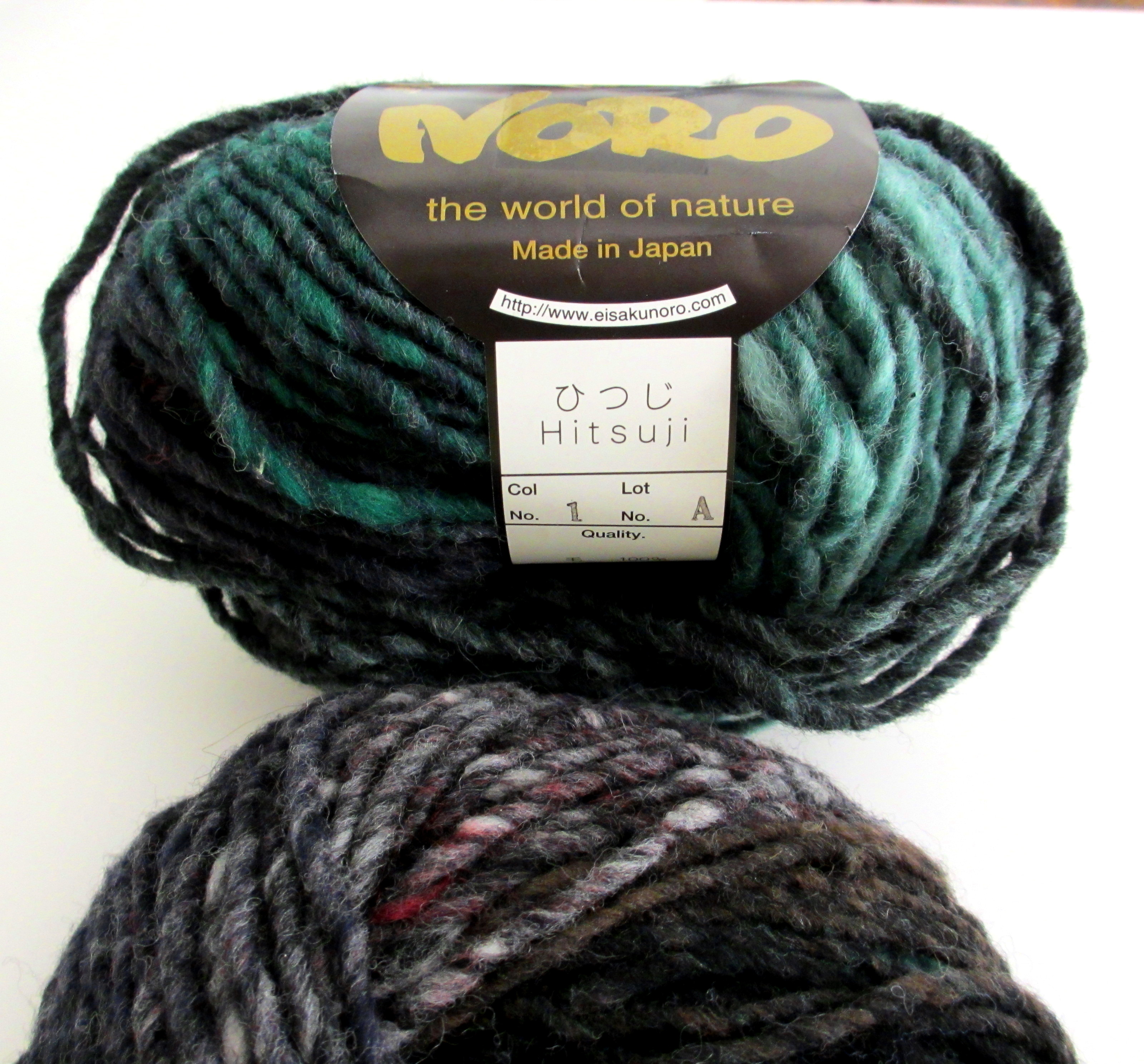
I’ve been organizing my yarn and recently discovered some vintage Noro.  It’s interesting to reflect on the generations of this fantastic yarn.  Recently, searching through a basket of Noro’s Hitsuji at my lys, I discovered buried treasure…the first color of Hitsuji from Lot. No. A.

I recently completed a sweater designed by Jenny Watson, Noro NOW!, design 3, using Noro’s Hitsuji, Col. No. 7, Lot No. A.  I am also eagerly working on a project with Noro’s Silk Garden.

Mitered Square Blanket

Once the cover of  Horst Schulz’s book, Patchwork Knitting opens, color and texture radiate from the page.  It’s as if the cover of Pandora’s box has been removed filling my creative space with numerous possibilities.

Domino Knitting by Vivian Hoxbro also explores the techniques of patchwork knitting. In 1993, Hoxbro was introduced to Schulz at a handcraft fair in Germany and later travelled to Berlin for a course in “the new knitting.”

In 2006, Kay Gardiner and Anny Shayne, founders of www.masondixonknitting.com published Mason-Dixon Knitting.  While flipping through the pages, there appeared on page 108, Mitered Square Blanket.  Stripes of color playing with the geometrics of a square teased the right-side of my brain.  I began to collect colors of Cotton Classic by Tahki Yarns/Tahki-Stacy Charles, Inc., (1-3/4 ox (50 g), 108 yds (100 m), mercerized cotton, and needed a way to keep track of colors already purchsed, in order to eliminate duplication.  The Mitered Square Blanket calls for 40 hanks in assorted colors.

I punched holes on index cards and categorzied the yarn by color.  The color-coded cards are fantastic when making color selection and act as a device for playing with color combinations too.  I’m playing around with color combinations and plan on making a trip to my local yarn store for more yarn.