Stay tuned! I’ll be back…
Tag: knitting

Healthy Fashion
The most recent concern over man-made fabrics vs. animal or plant based fabrics, cheap fashion and slow fashion are not “new” concepts. Have you ever heard of the Rational Dress Exhibition at Kensington Town Hall in 1883, or the Health Exhibition in London during the Spring of 1884?
At the Rational Dress Exhibition, Liberty’s fabrics were described as,
“Playing an essentially prominent part in connection with Rational and Healthy dress.” The healthiness of the fabrics came from “their purity, their natural dyes, their unadulterated by any finish or dressing, their freedom from any of the usual processes resorted to in order to impart a meretricious appearance of value to worthless materials.”
For the organizers of the Health Exhibition of 1884, Edward William Godwin wrote a handbook where he pointed out, “Some modification to the Greek costume was perfectly applicable to the British climate if it was worn over a sub-stratum of pure wool, such supplied by Dr. Jaeger under the modern German system, explaining,
“The principle was to suspend all apparel from the shoulders and rely for beauty not on the stiff, ready-made ornaments of the modern milliner, bows where there should be no bows, flounces where there should be no flounces, but on the exquisite play of light and line that one gets from rich and rippling folds.”
Was this the beginning of the end of the corset?
English architect Edward William Godwin (May 26, 1833 Bristol – October 6, 1886 London), was best known for his Ruskinian Gothic style of architecture, evidenced in the Guild Hall Northampton.

Starting in the 1870’s through the 1880’s, Godwin was associated with Liberty’s. He designed wallpaper, printed textiles, tiles, “art furniture” or metal work set the tone in houses of those of an artistic and progressive attitude. Oscar Wilde said, “Godwin was one of the most artistic spirits of the century.” In 1884, Liberty appointed Godwin to supervise the Costume Department.
Dr. Gustav Jaeger, (June 23, 1832 – May 13, 1917), German naturalist and scientist, 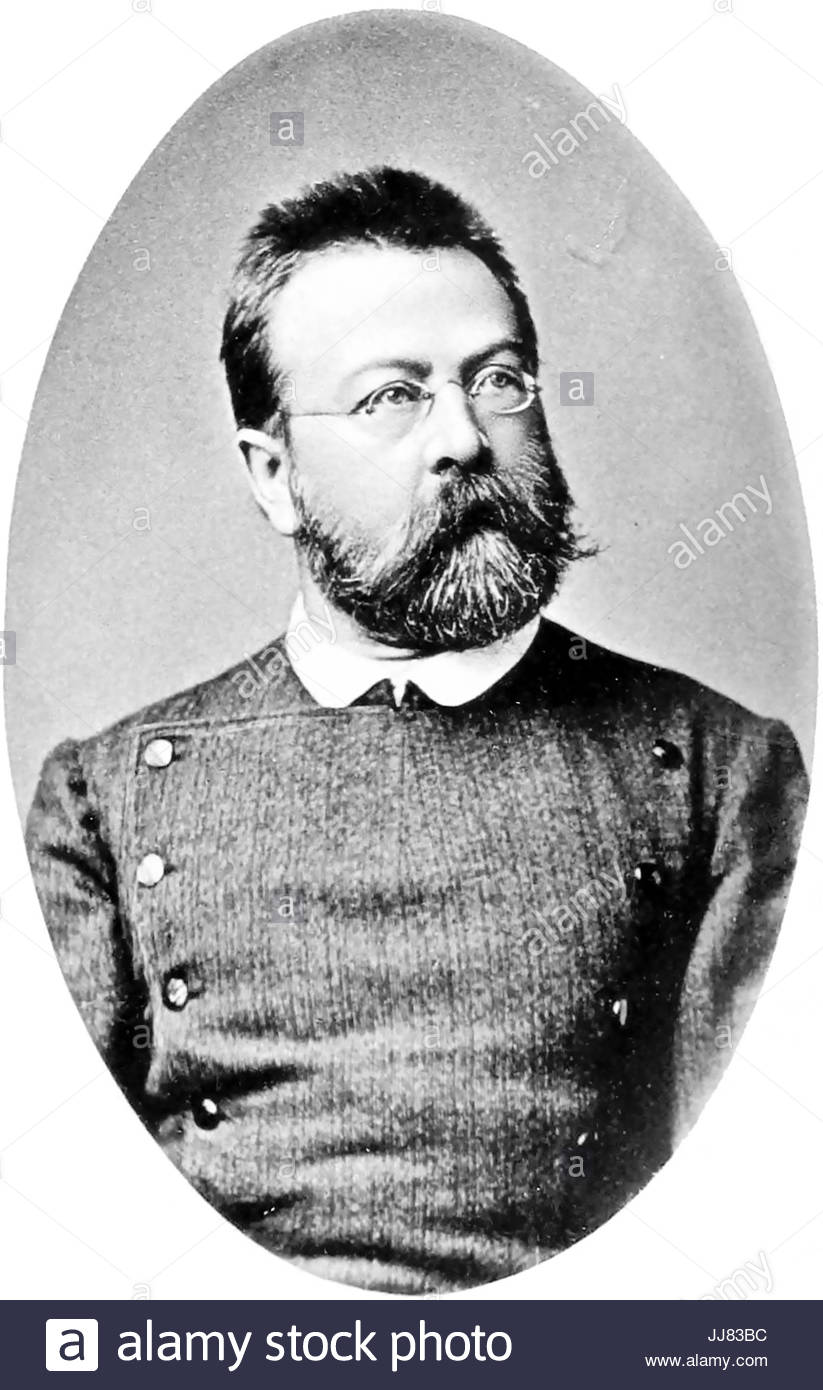
believed wearing wool “close to the skin,” was healthy. Jaeger began creating wool suits, around the same time he cut ties with Germany around the start of World War I, and became a British brand. Long johns were the beginning leading to an established clientele looking for British made garments at a reasonable price. Jaeger’s branded his fashions with wool and exotic fibers such as cashmere, angora and alpaca. Jaeger’s yarns are also used by the hand knitter.


Here’s a photo of camel hair fabric, natural cashmere yarn undyed and brush tail possum from New Zealand.
We still have the same concerns of those living in the 1800’s, consider the research expressed by Elizabeth L. Cline, in her book Over-Dressed, page 84, “The production of man-made fibers has doubled over the last 15 years…” How many of your garments are 100% wool? Do you recognize the fiber content on your garment labels? Check out the New York Times T Magazine, dated August 19, 2018 and explore, The Shape of Things to Come, pages 168-177. A visual commentary on fashion with “voluminous proportions layered for maximal impact.”
(I used Wikipedia and Liberty’s A Biography of a Shop by Alison Adburgham for this blog post. Photographs have been cited above.)
Share this:

Knitting and Sewing
I wanted to title this post “Hand Knitting Meets The Industrial Revolution,” but I realized yarn is spun using a machine too. I recently completed two classes in Fashion Design at Canada College located in Redwood City, California, one of which was Flat Pattern Design. The other class, “Designer Techniques” discussed different ways to refashion an existing pattern and make it your own.
Demonstrating a technique not covered in class was one of the course requirements. I elected to combine hand knitting with fabric. For the sample, I incorporated techniques from Flat Pattern Design and drafted a half scale dress with princess seams.

The pattern pieces are pinned to the hand knit and traced with two rows of stitching using a teflon foot.
An alternative technique would be to baste a line of stitches on your fabric using sturdy thread. With your knitting needles, pick up into the stitches and knit down to create an attached piece of knitting.
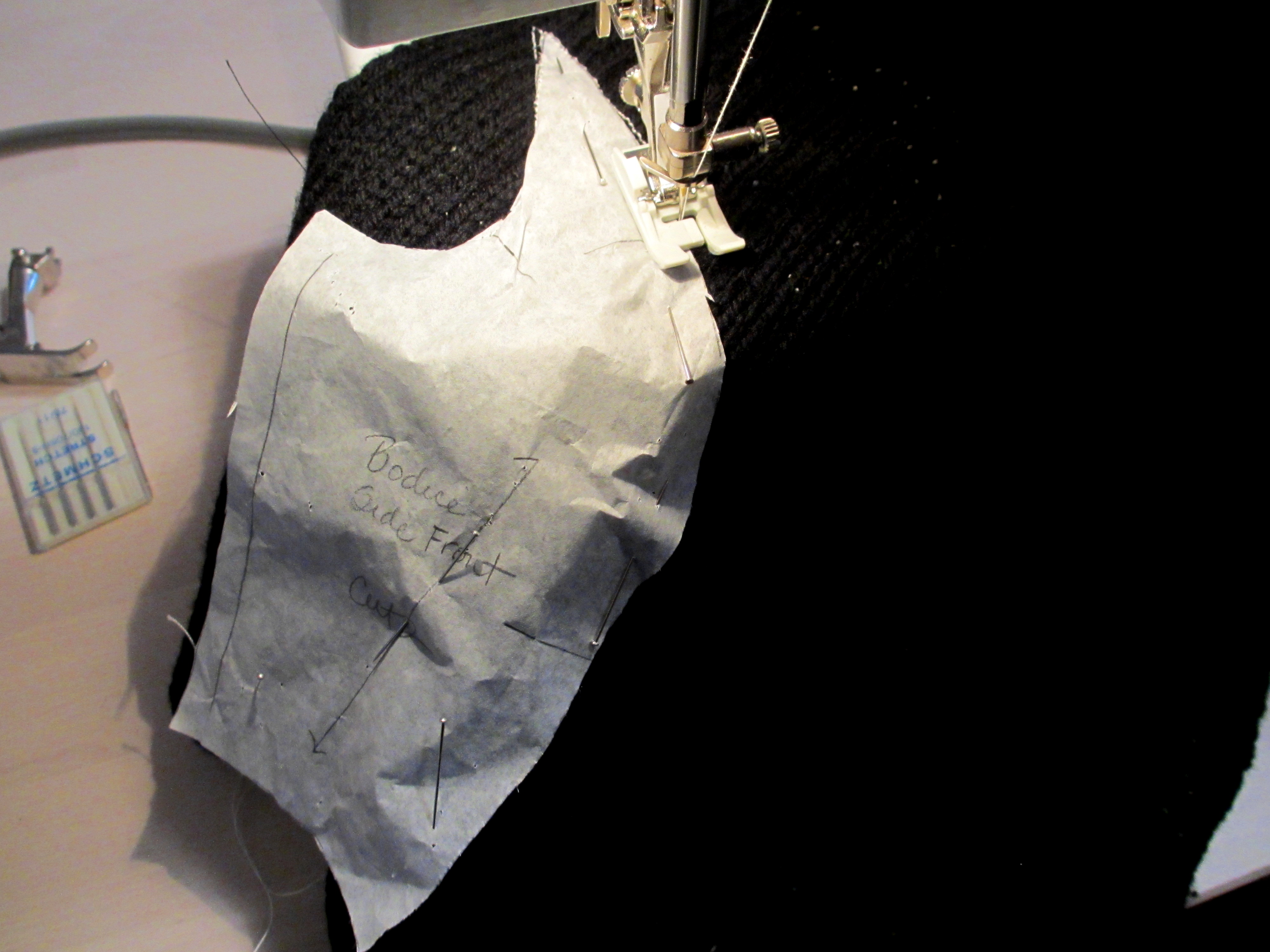
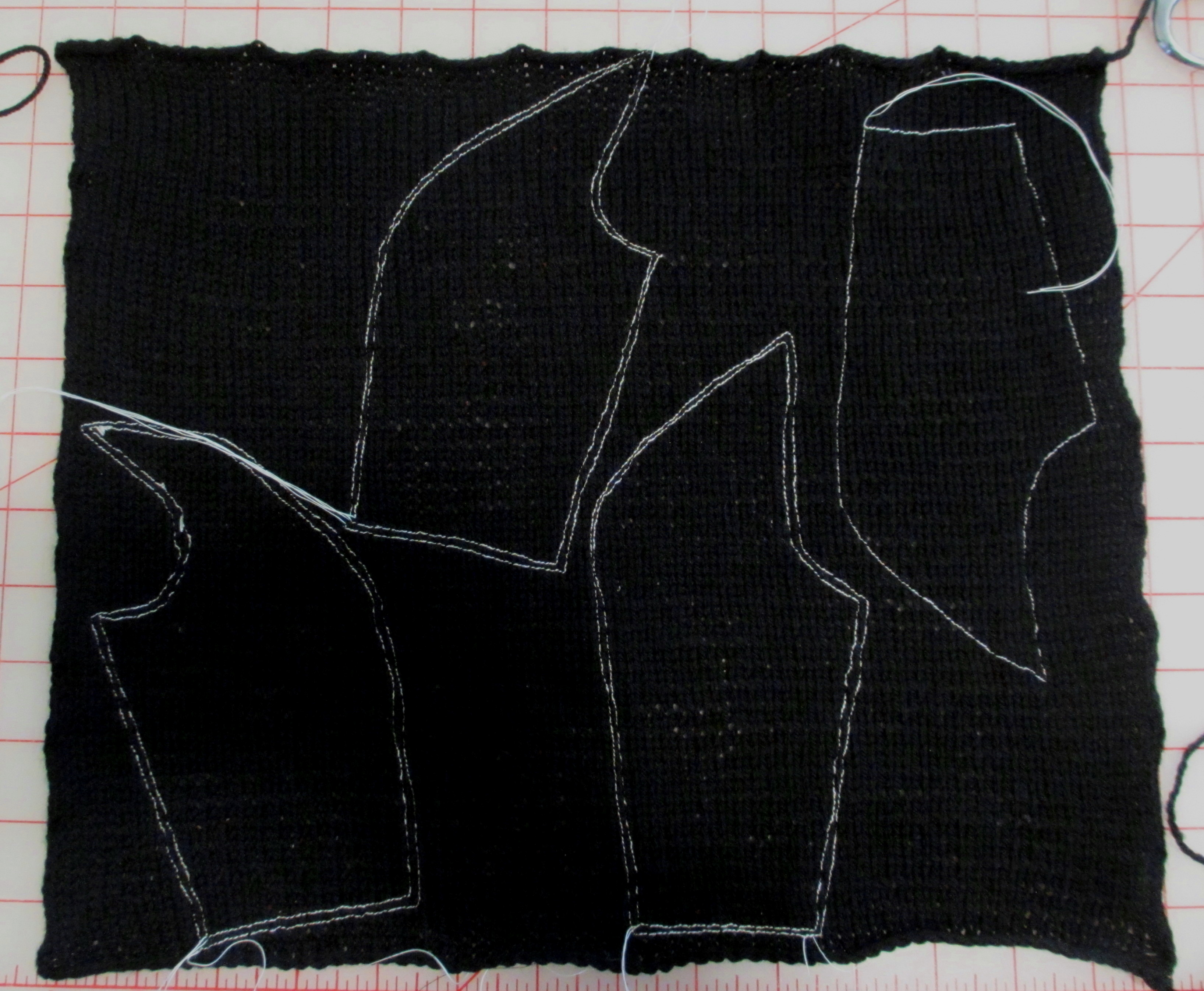

In order to eliminate bulk from seams, position the knit fabric with an 1/8″ to 1/4″ seam allowance on the hand knit and 1/2″ seam allowance on the fabric.
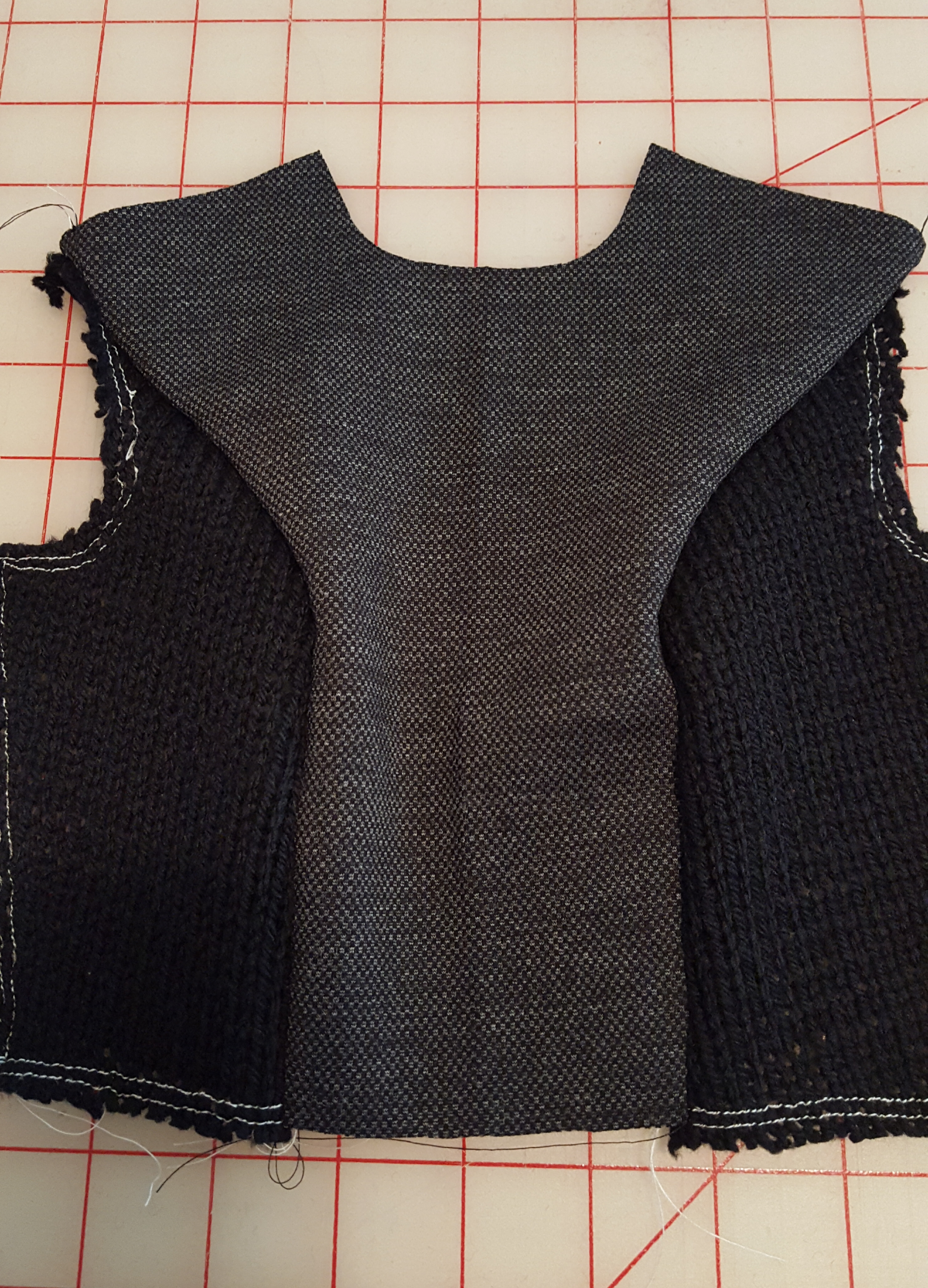

Combining hand knit with fabric is an idea I’ve been thinking about for quite some time. “Designer Techniques” was the perfect venue which presented an opportunity for me to take my idea of combining hand knit and fabric a reality.
Share this:

Swatching
Well…hopefully last night was the end of the rainy season in Northern California. Last year at this time, I was wishing for more rain. Now, the drought is officially over! I look forward to pulling some weeds and planting sunflower and zinnia seeds along with a few tomato plants. At the moment, I’m on the mend due to a stress fracture in my left foot, which gives me more time for knitting.
A couple of years ago, The Yarn Truck was parked at one of my local yarn stores, and I purchased two skeins of OctoBaa 100% superwash merino (8 ply sport weight) 270 yards, from Indiodragonfly. What can I create with 540 yards of yarn? Time to swatch.
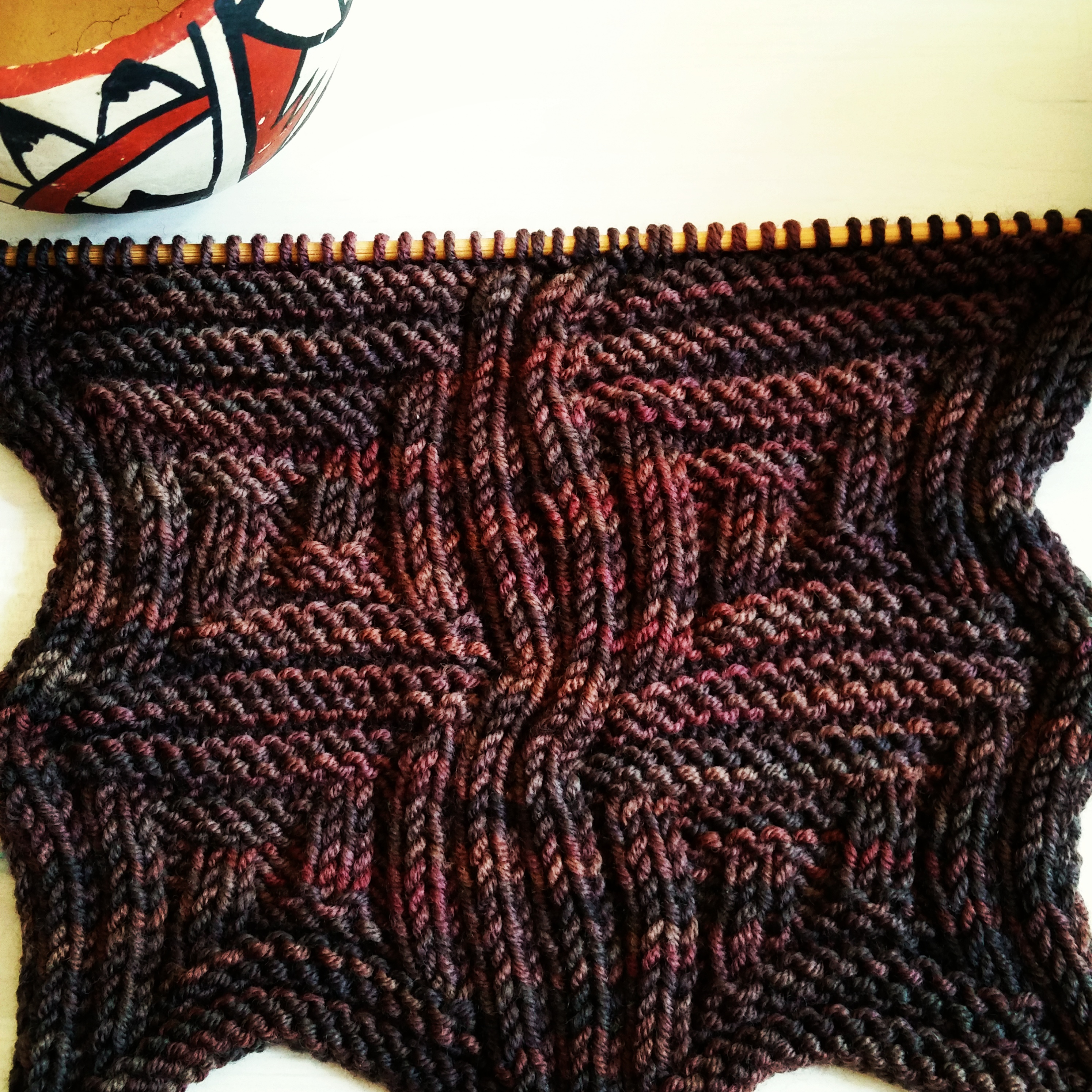
This stitch pattern above reminds me of ornamentation found on Etruscan and Greek architecture, vases and tomb paintings. I had an idea of combining two different stitch patterns in one project, so I studied the specific visual qualities of the above swatch. I noticed the dimensionality created by the knit and purl stitches. Also, if you look closely, there is a pattern within a pattern. Do you see it? Notice the movement of the pattern.
The first swatch pictured above deepened my desire to find other patterns which would express surface movement.

Isolating the hidden pattern in Swatch 1, inspired me to seek out the use of cables. Swatch 2 represents an element found in Swatch 1.

Swatch 3 builds upon surface elements found in Swatches 1 and 2. The cables found in both swatches lean to the left and the use of garter stitch horizontally separates the vertical elements of stockinette stitch.
Recently, I’ve made a concerted effort to really “look” at my knitting. What relationship develops between the yarn and stitches while creating the overall pattern? How does this relationship visually enhance the color and qualities of the fiber? Or, is it the other way around…How does the synergy between the elements affect the outcome? I believe, the whole is greater than the sum of its parts.
Share this:

Wrapped in Ripples
As I explore new techniques in knitting, my posts are happening less frequent. The more involved the project, the longer between posts. My most recent endeavor forced me into learning short-row shaping.
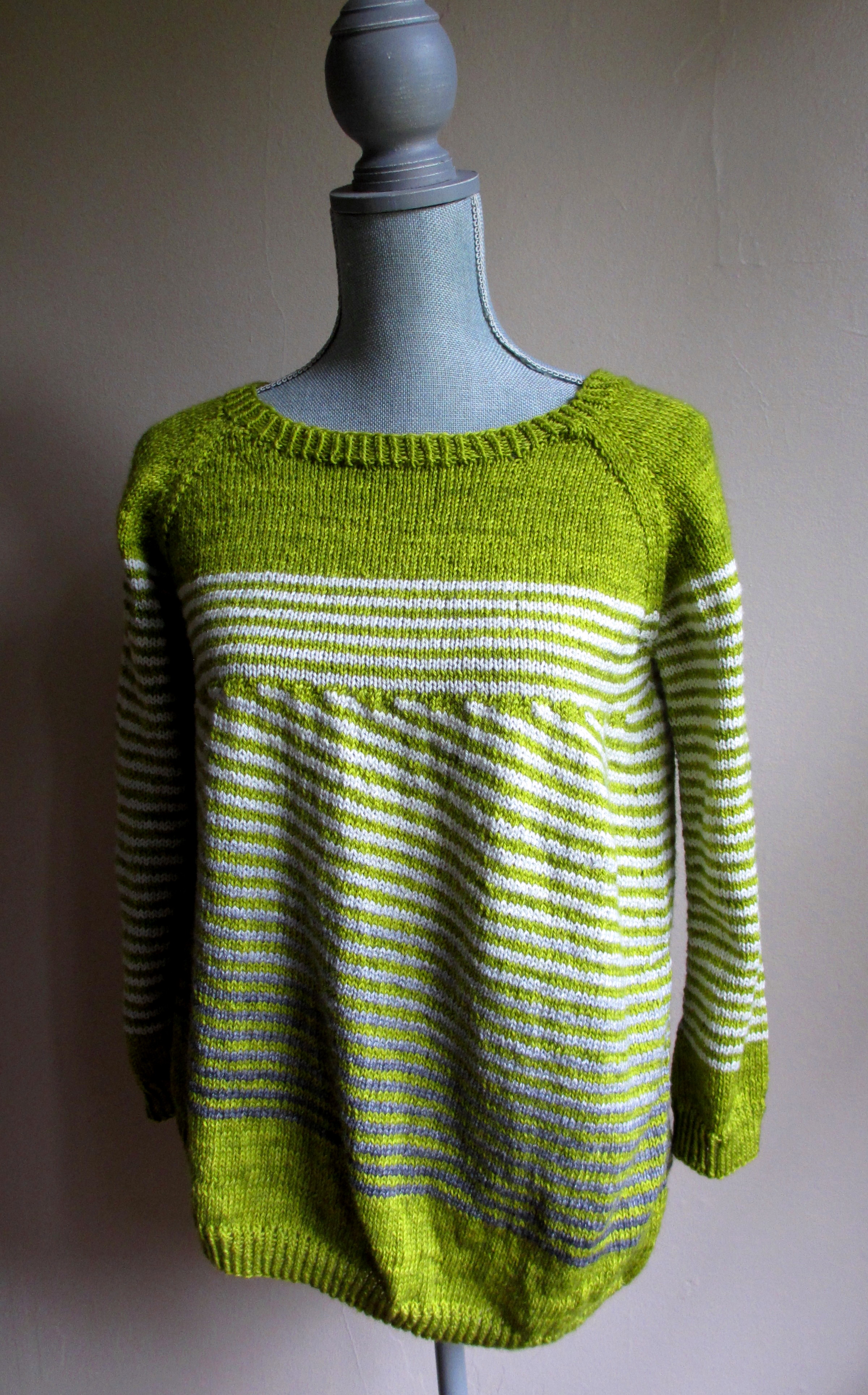
Breathing Space, designed by Veera Valimaki is a true commitment to knitting. Knitting stripes combined with short-row shaping creates an interesting asymmetrical hemline. The pattern is well-written and fits like a dream.
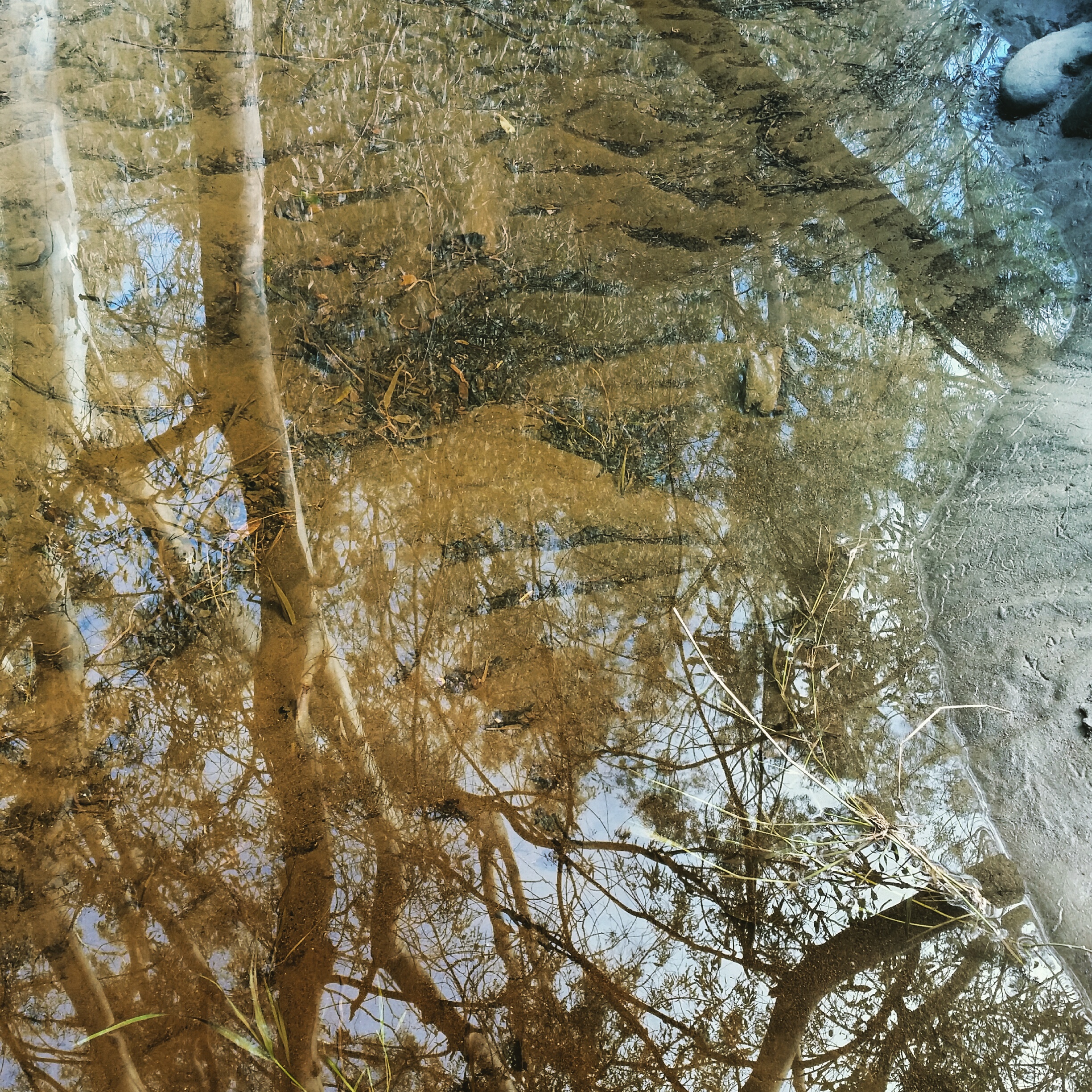
Another project I’ve completed is inspired by an image I captured on my local hiking trail. The local landscape has changed quite a bit due to the flooding California experienced this Winter. Trees have toppled and the power of gushing water forcing its way through our creeks and dams, has altered the topography.

The pattern stitch paired with Zealana Rimu creates a beautiful sculptural piece of knitting.
Wrapped In Ripples is inspired by my photo, Ripples In The Sand.
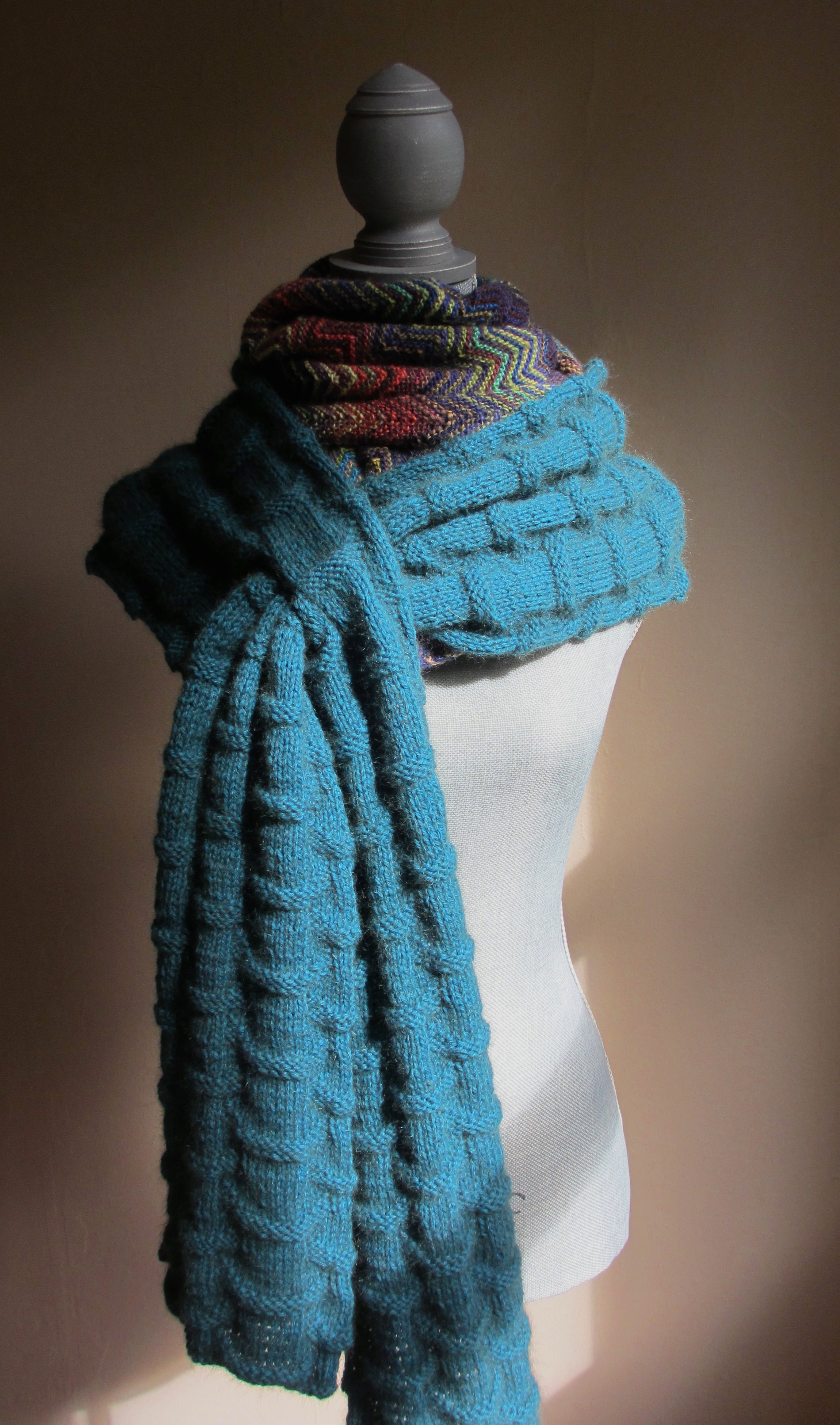

Click on the link below to get the free pattern of Wrapped In Ripples.
Share this:

Versatility With Binary Stitches
I’ve been programming (in a sense) my latest design using Binary Stitches©. The original order of stitches was not what I ended up with. I manipulated the rows as if they were lines of code, trying to achieve a particular visual effect.

Paper cut-outs were used to help me decide which direction I wanted to knit.

Was I going to knit in the round, flat with a seam or use a provisional cast on? I decided to knit Versatility flat with a seam.


Versatility With Binary Stitches©
Materials: Malabrigo Rasta Kettle Dyed Merino Wool, approx. 90 yds, col. 416 Indiecita. Option 1 (qty 1) and Options 2-4 (qty 2).
US Size 15 needle
Gauge: 2 sts = 1″
Measurements: Option 1: 12″ wide x 20″ long (after light blocking)
Options 2-4: 12″ wide x 40″ long (after light blocking)
Multiple of 6 + 2
Edge Stitches: (RS) Wyif, slip the first and last stitch purlwise. (WS) Knit tbl of the first stitch and knit the last stitch.
Row 1: K1, P1, K2, P1, K1, continue across the row.
Row 2: Knit stitches as they appear
Row 3: K3, P3, continue across the row.
Row 4: Knit stitches as they appear.
Repeat these 4 rows.
Using Size 15 needle, CO 26 sts. Knit to desired length*. BO loosely and seam using desired method.
Option 1 is knit to a length of 20 inches, which gently hugs the neck.
Options 2-4 are knit to a length of 40 inches, which offers a variety of ways to wear Versatility.
Pattern © by Mary Lou Fall
Binary Stitches©2016
Patterns are protected by international copyright laws and are intended for personal use only. Other uses are strictly prohibited.
Share this:

Design With A Conscience
Today is a day void of unnecessary noise. A day so peaceful, I can hear myself think. No streaming Netflix, texting, working out at the gym or listening to music. I can hear myself turn the pages of one of my favorite knitting books looking for something new to knit, along with the tapping of my laptop keyboard as I write this post.
Within the last week, I’ve discovered how small the world of creativity has become. For the last five years, I’ve attempted to use my blog to fill a large empty space in my heart. I wanted to channel my energies into something positive, and not dwell on a not so pleasant situation. So, I exposed my creative self to the world through this blog. I viewed my blog as a means of communication and education about what interests me, hoping along the way, someone else would enjoy this journey. I’ve always been cognizant to give credit where credit is due. If I post a picture, I site the source. If I reference a book, I credit the author and publisher. But of course, I don’t own a large yarn distribution company, and I haven’t written a book (even though I could), nor do I pound the pavement looking to teach at my LYS (been there done that).

I am flattered that We Are Knitters finds my use of Binary Stitches© worthy of using as a title for their new snood kit. Check out my blog post of August 9, 2016 where I discuss my development of Binary Stitches©2016.

This is such a beautiful new scarf kit “Hagire” from Habu Textiles. I too was inspired by Habu yarn in 2013.

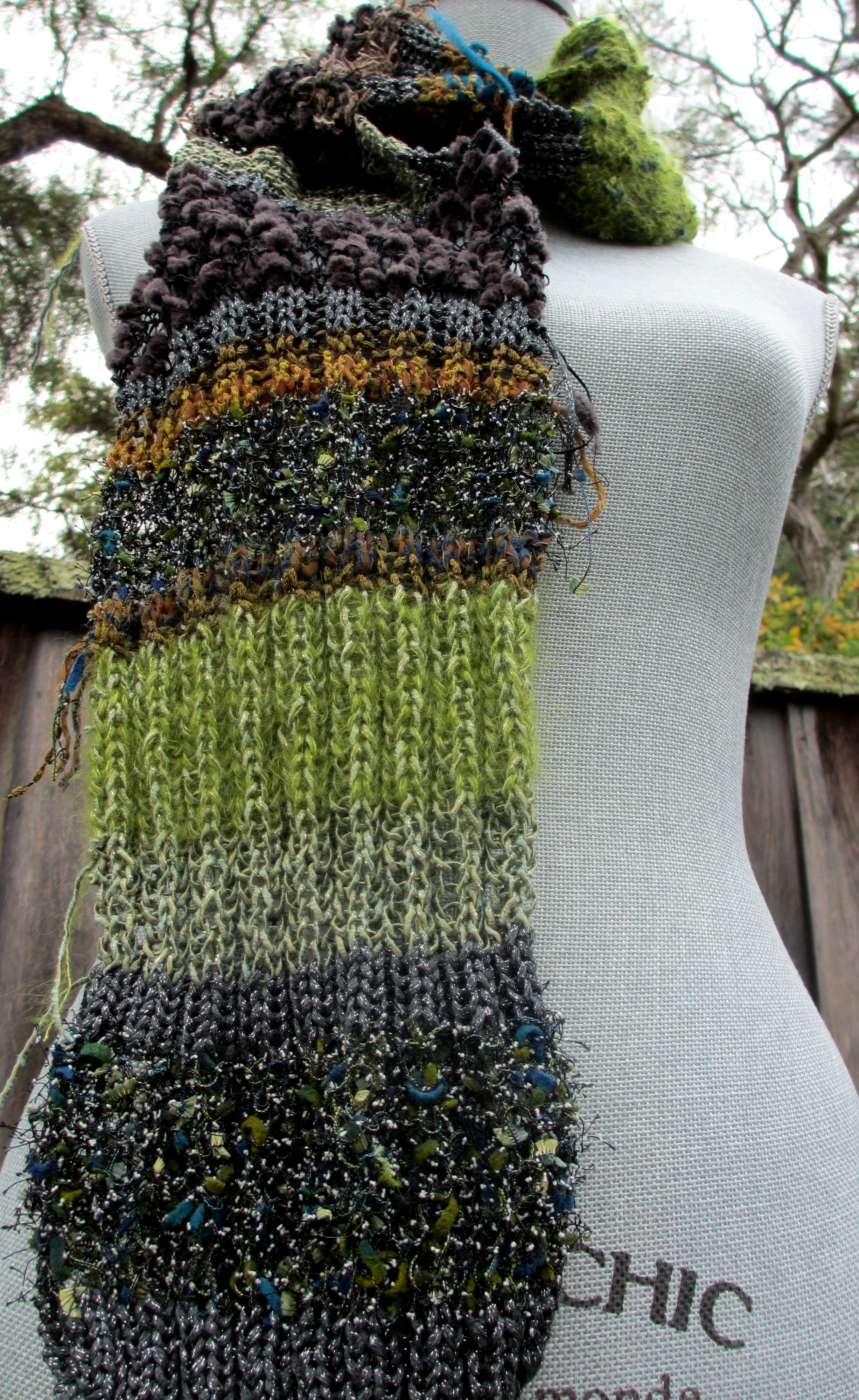
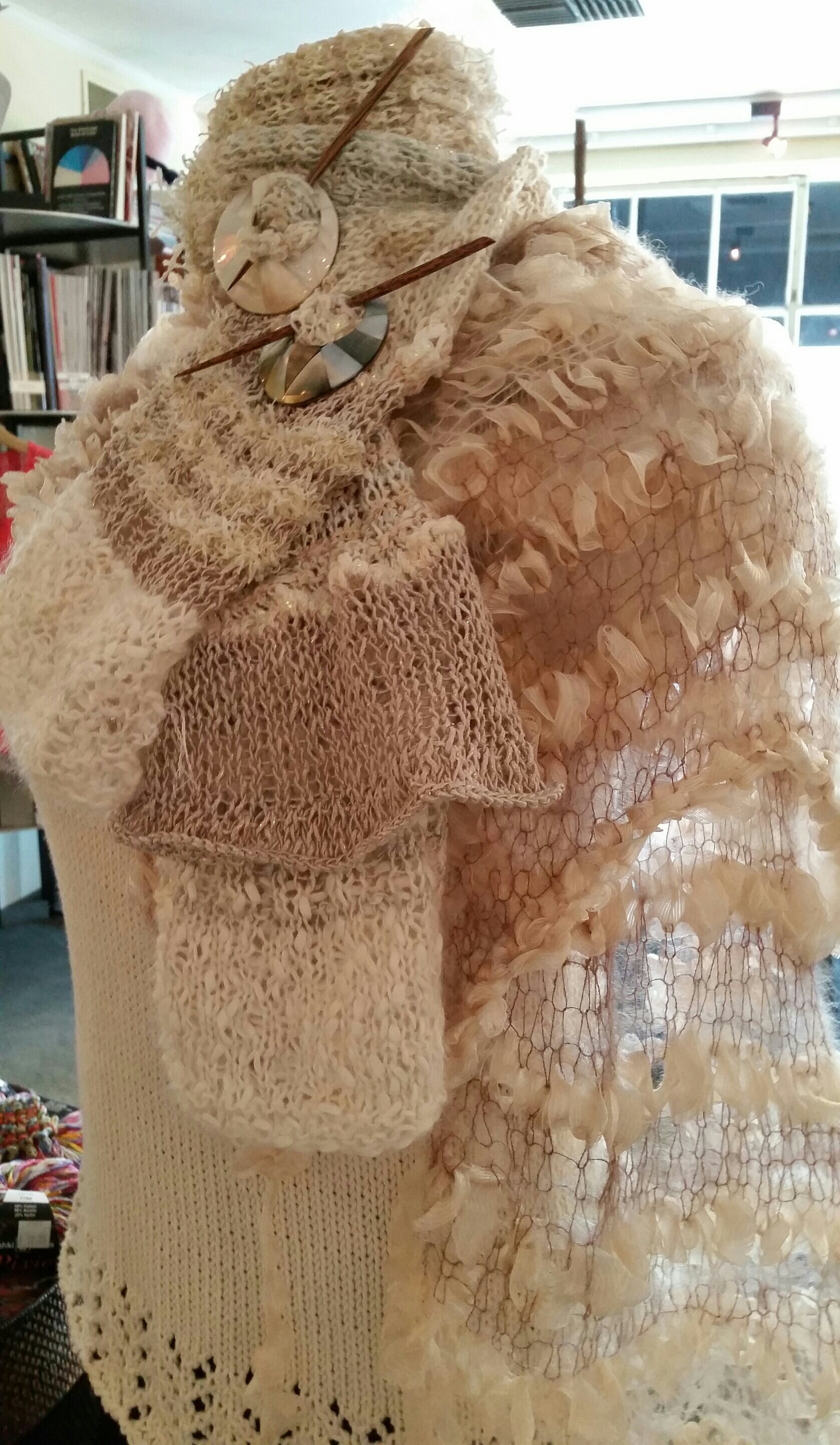
*The above pictured scarf is my design using Habu Textiles and the shawl is Loopy and Luscious found at Knitty.com
Unlike the designers at Habu, I wasn’t trying to use up leftover yarn, my use of Habu Textiles highlighted the unique qualities of combining and playing with texture and color.
It’s been said, “Imitation is the best form of flattering.” Well, “I’m over it!” How about, “Give credit where credit is due” or perhaps “Design with a conscience.”
Share this:

My Studio Space
It’s been a few days since my last post, but for the last nine months, in between my sewing and knitting projects, I’ve been involved in a DIY project. I decided to convert our spare bedroom into my studio space. I pulled up old carpet, filled plaster cracks, sanded molding and painted. The floors also needed to be professionally refinished.
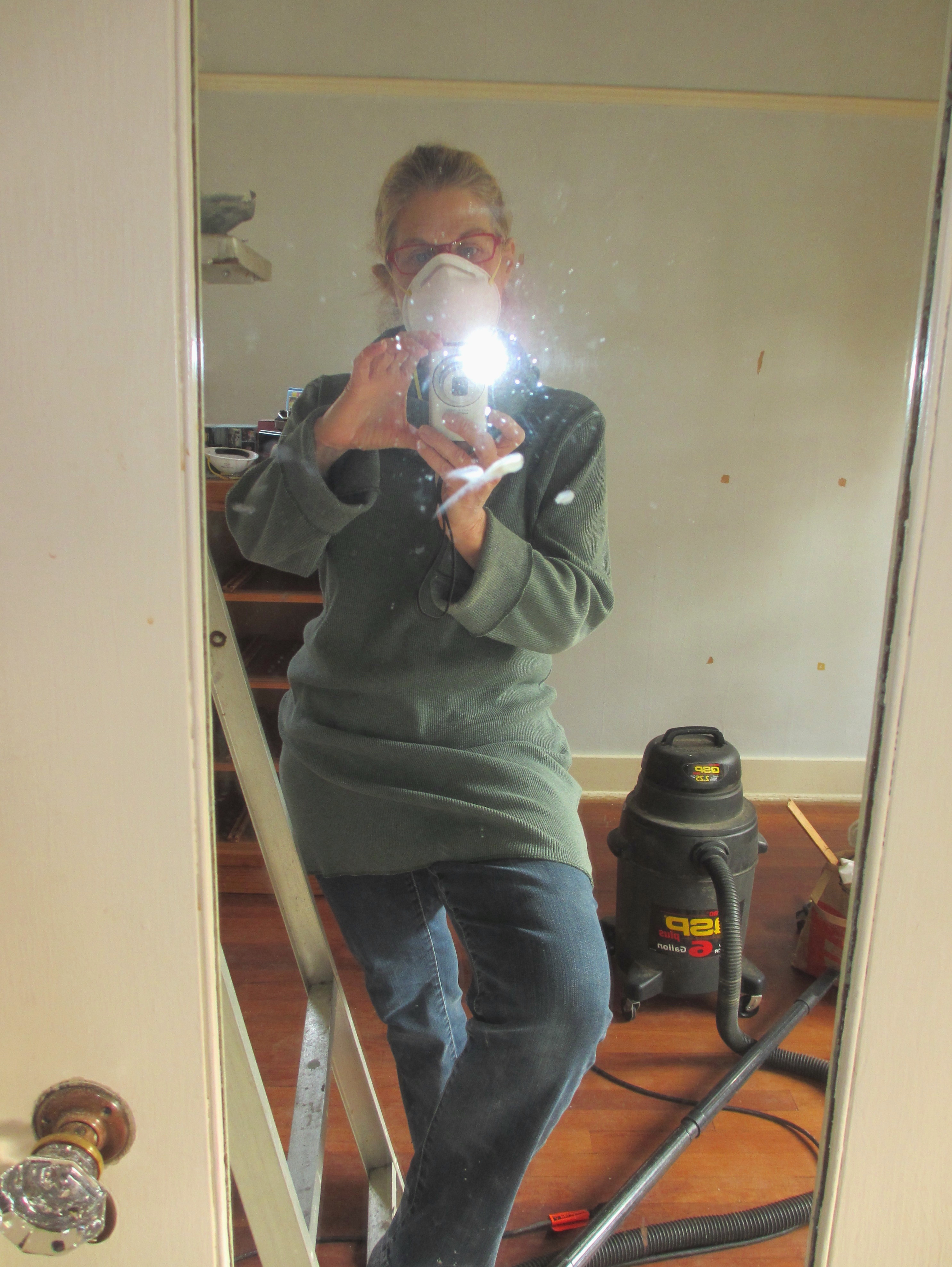
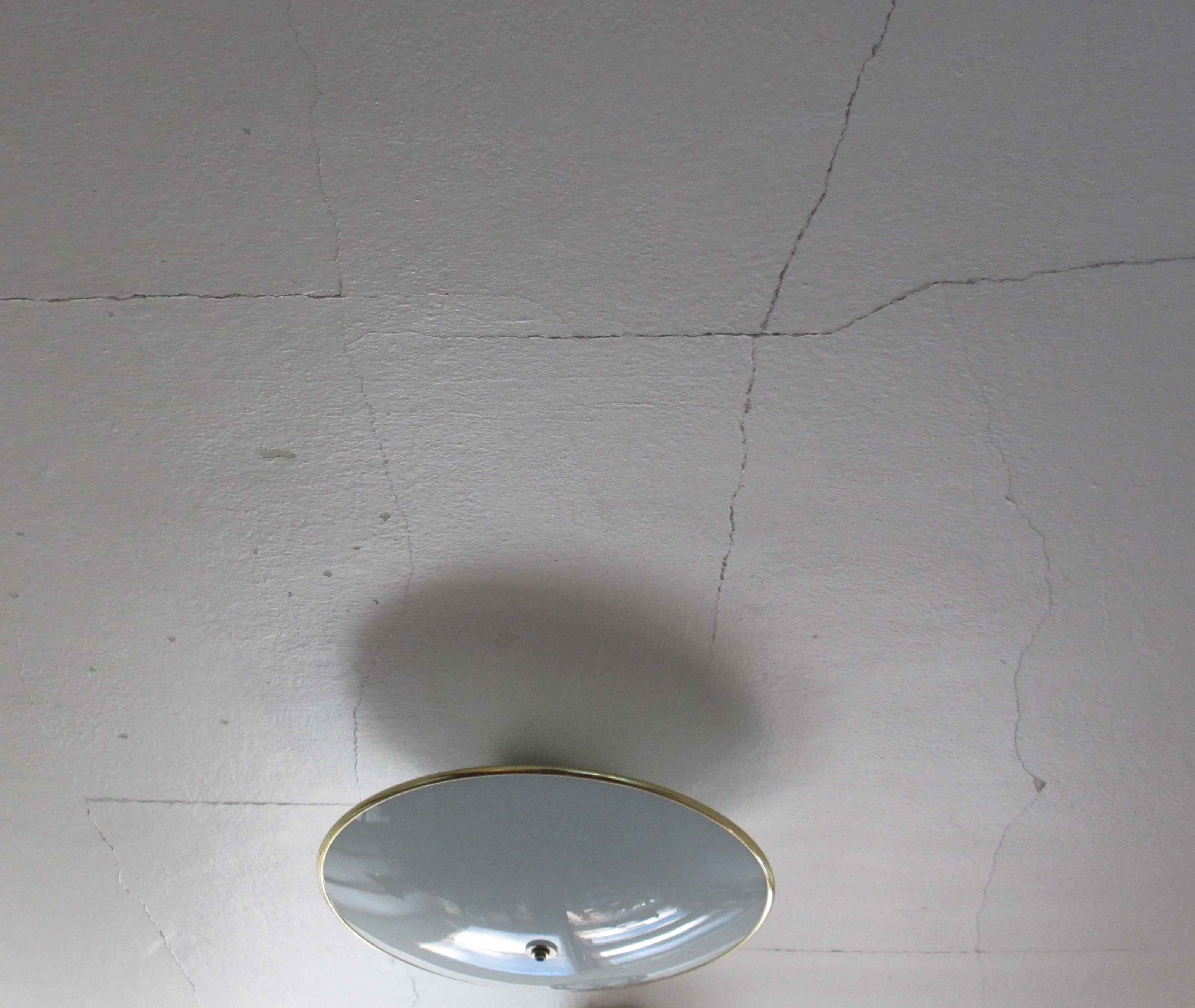

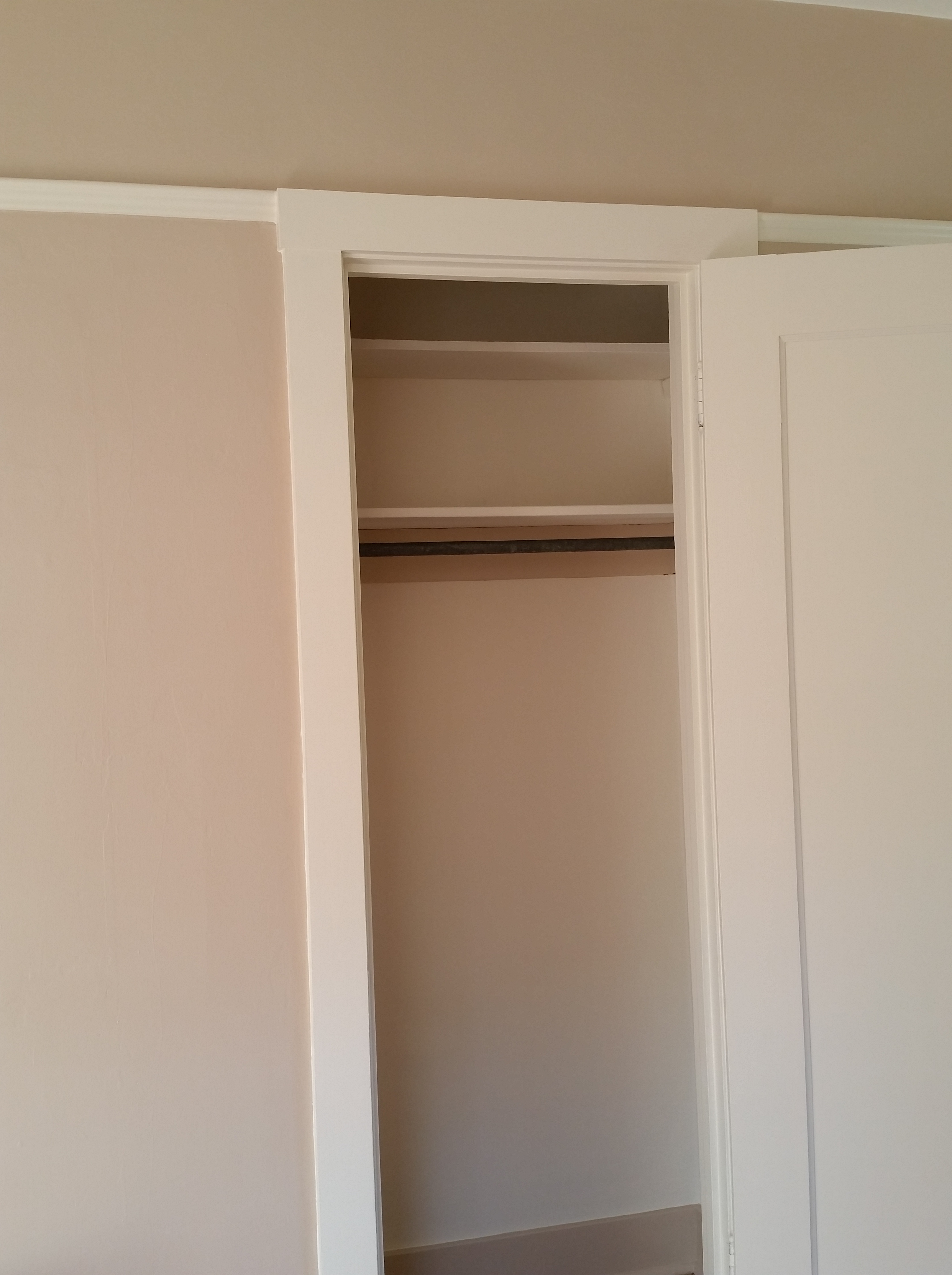
It’s amazing what a fresh coat of paint and determination can accomplish.

Newly refinished floors.

Deciding to convert our spare bedroom was not an easy decision, but after being vacant for five years, I decided it was time to create a space for me. A positive enriching environment filled with my favorite things…yarn, books, fabric and ideas.
Share this:

Stitches Wednesday #5
A couple of weeks ago, I came across an advertisement in the August 21, 2016 issue of The New York Times Style Magazine from Missoni. It’s no secret I’m in love with anything Missoni. I’m am so excited to share this with you for another reason…

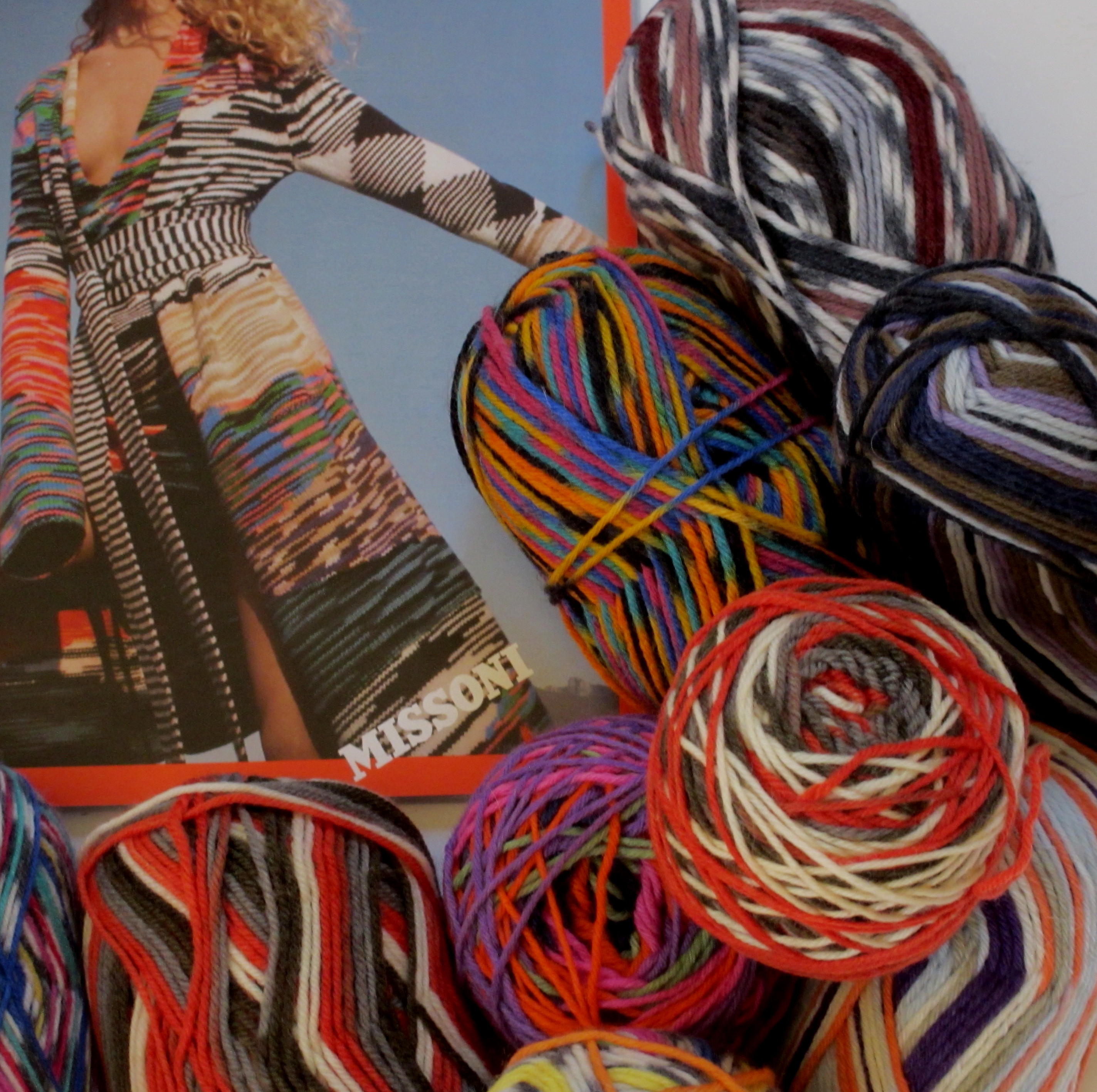
Now, I know what to do with all the self-patterning sock yarn I’ve collected over the years for socks that didn’t happen. Doesn’t it look like I may have a couple that match Missoni’s? Of course, the coat above was knitted by machine, but it might be fun to hand knit my very own.
Here is Stitch #5:
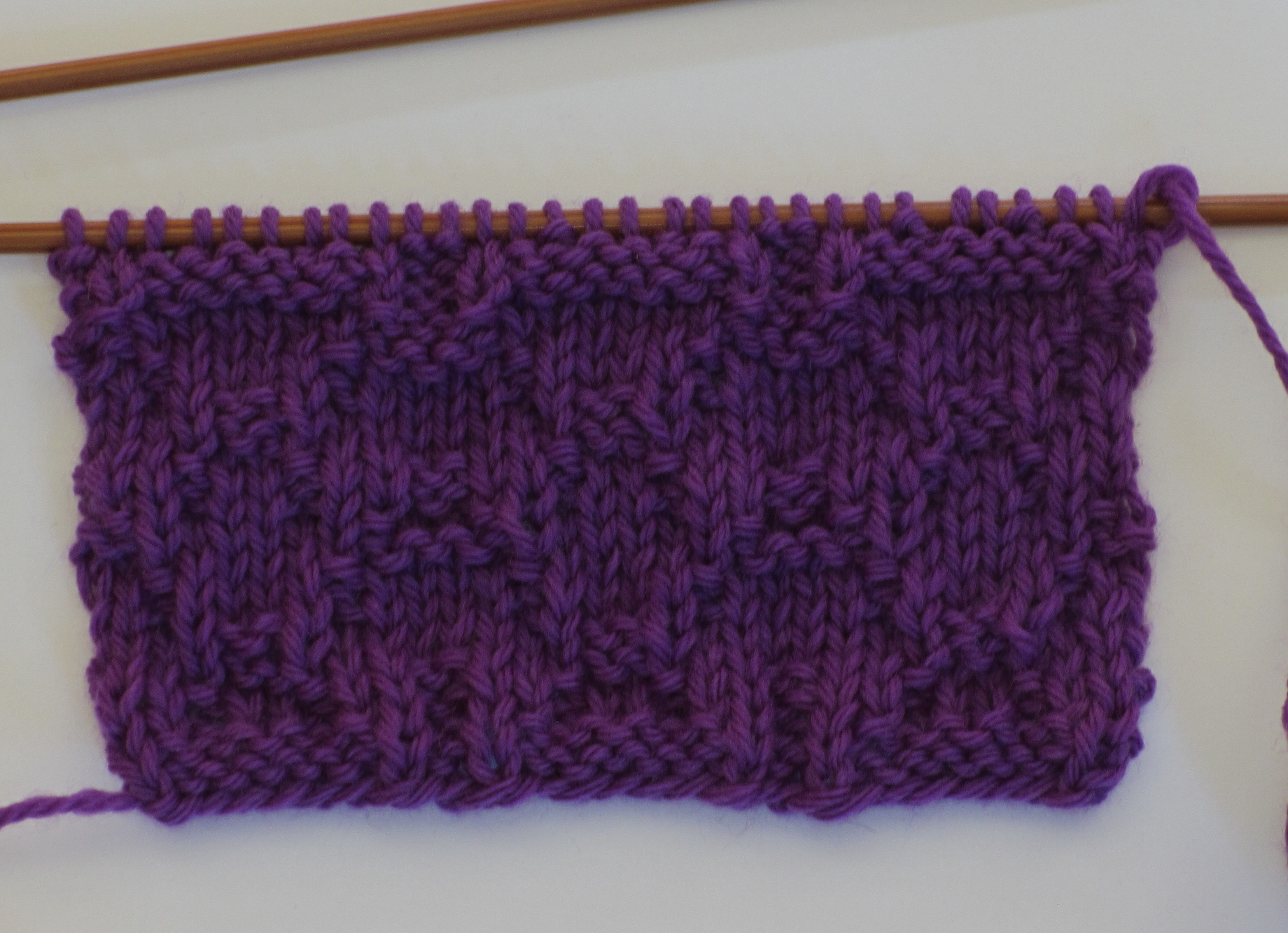
10 stitch pattern repeat
Row 1: K1, P1, K6, P1, K1
Row 2: All even rows, knit as the stitches present themselves.
Row 3: K1, P2, K1, P2, K1, P2, K1
Row 5: P4, K2, P4
Row 7: P2, K1, P4, K1, P2
Row 9: K2, P6, K2

Enjoy!
©2016Mary Lou Fall
Share this:

Stitches Wednesday #4
This week is my favorite Binary Stitches© pattern by far. The reversibility of all the Binary Stitches© makes this a very interesting journey. Many times, I’ve wanted to knit a particular stitch pattern to find out the “wrong side” is just that. Recently, a fellow knitter shared with me her experience knitting a shawl with slip stitches that didn’t look so great on the wrong side. So here is #4…
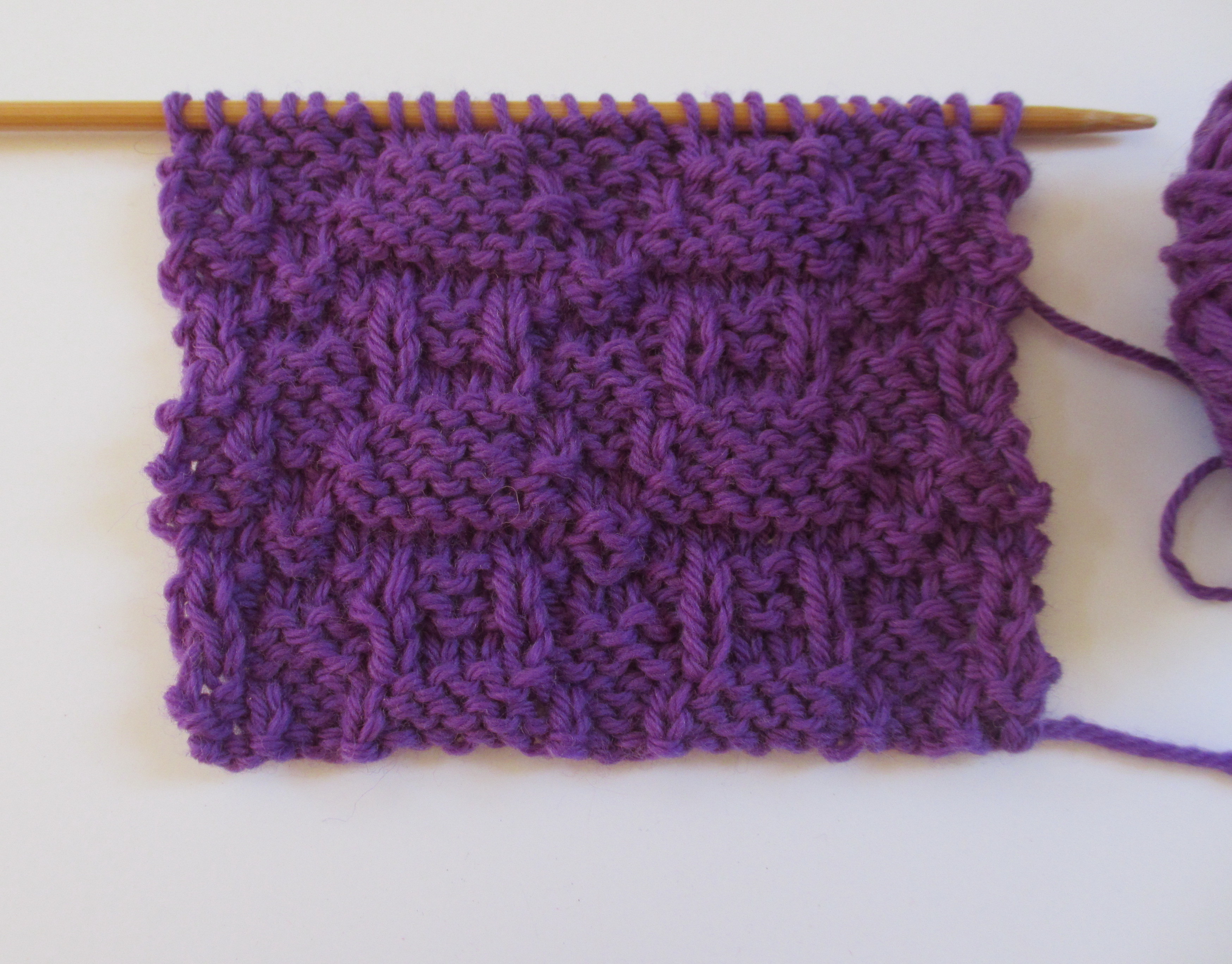
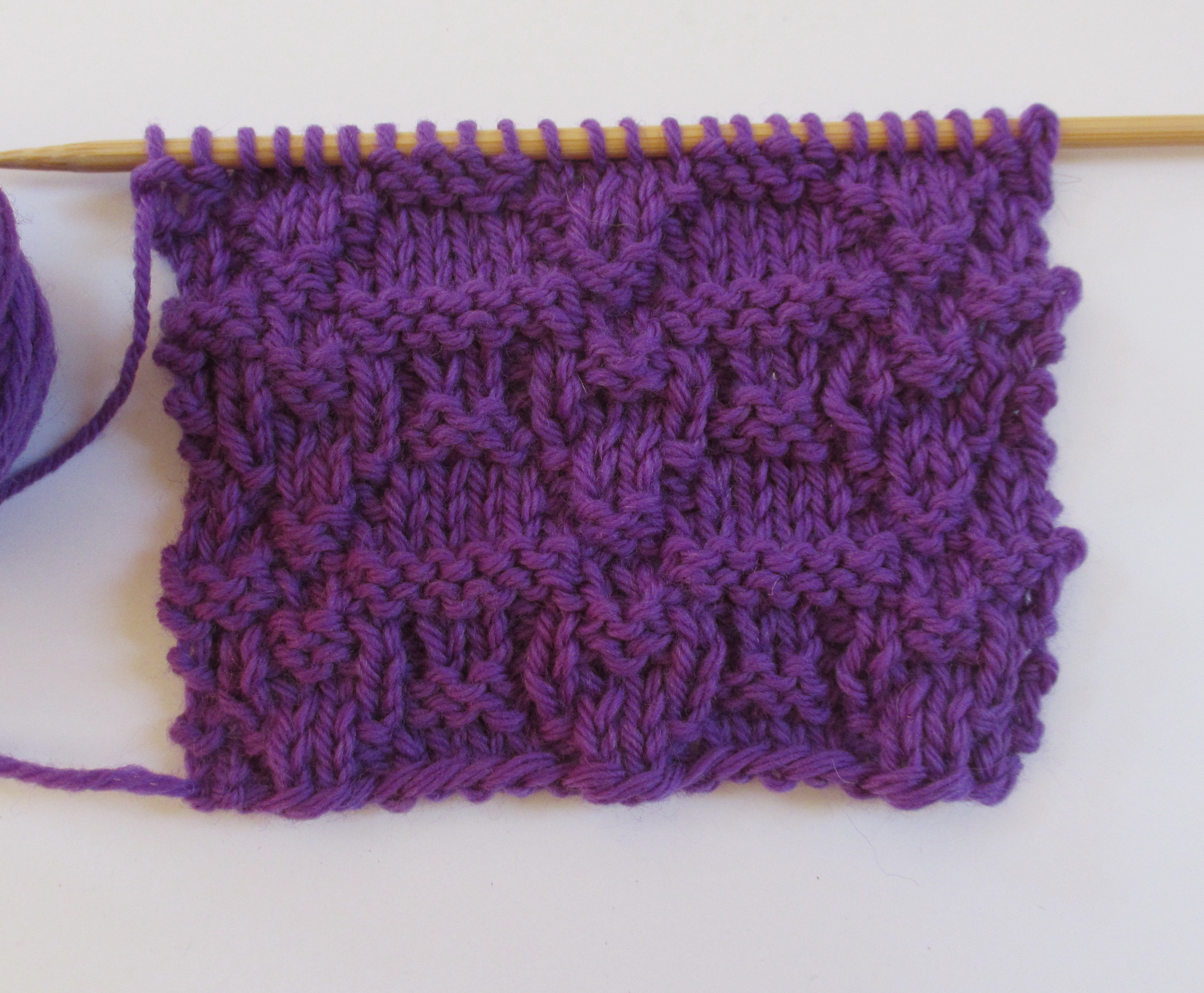
Here’s a current project using this week’s featured stitch. The particular yarn I am using, Plymouth Yarn, Arequipa worsted 90% Superwash Merino and 10% Mulberry Silk highlights the stitch definition beautifully.

I’m not quite sure where I’m going with this…buttons, vintage trim or maybe even a zipper.
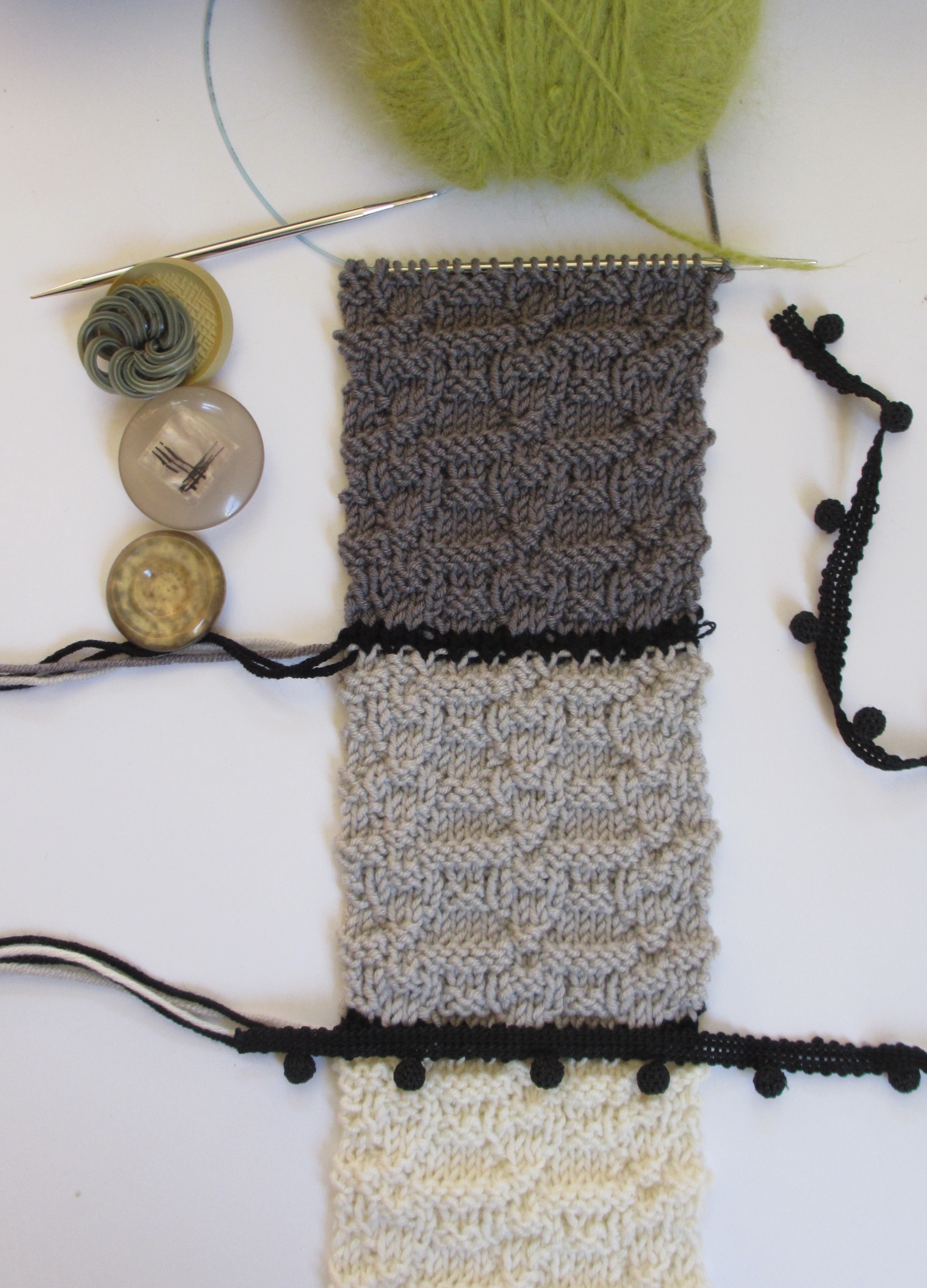
Binary Stitches #4©
Row 1: *P2, K1, P2, K1, P2, *repeat across row.
Row 2: All even rounds, knit stitches as they present themselves.
Row 3: *K2, P4, K2
Row 5: *P1, K1, P1, K2, P1, K1, P1, *repeat across row.
Row 7: *K3, P2, K3, *repeat across row.
Row 9: *P3, K2, P3, *repeat across row.
©2016 Mary Lou Fall

 Sticks-a-GoGo
You must be logged in to post a comment.