Yarn But No Pattern

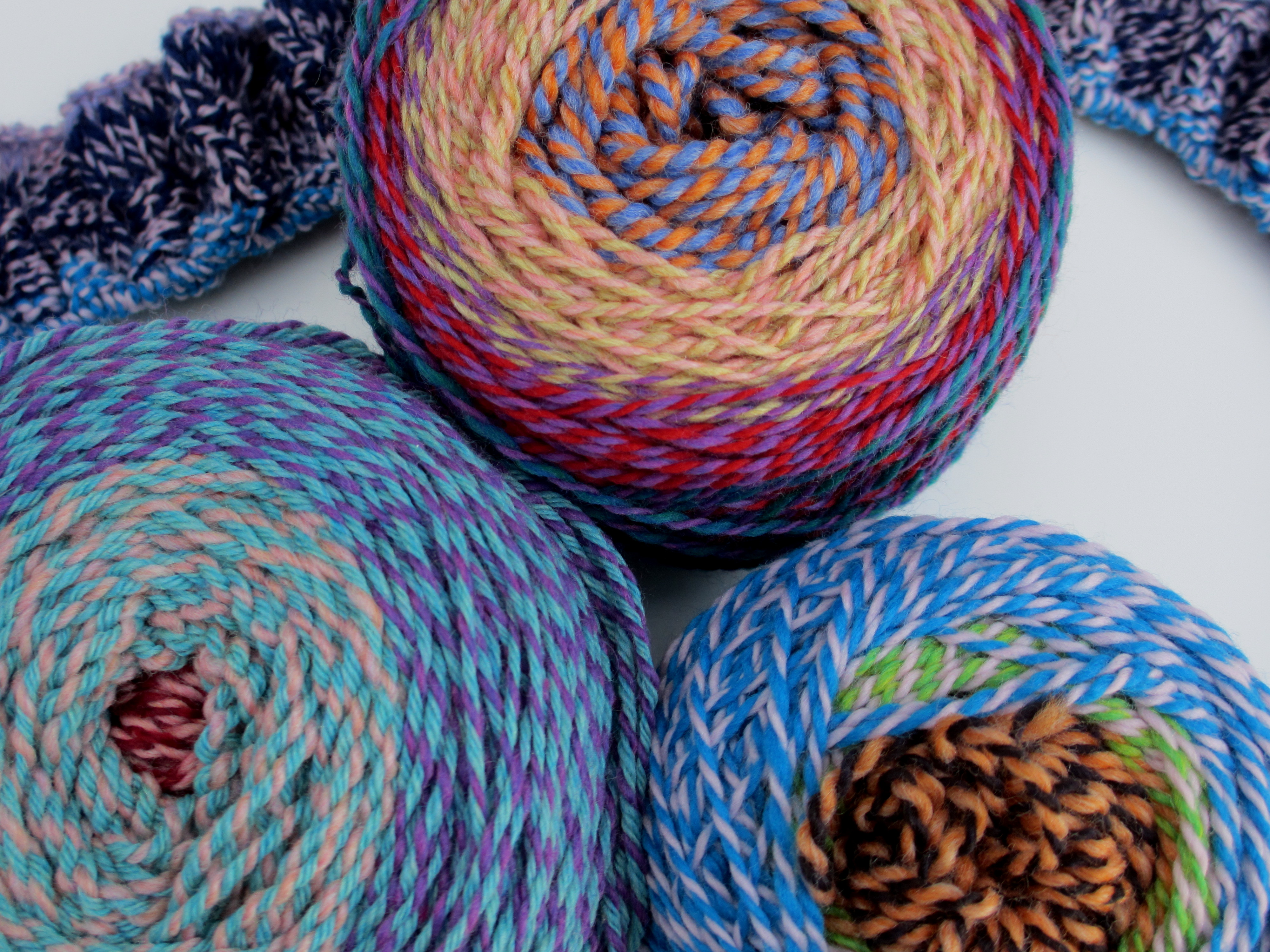
I recently purchased four skeins of Madeline Tosh’s Tosh DK  weight, color Spectrum “just because.”  The hand dyed yarn has the appearance of the irridescence of peacock feathers, and to the touch, the softness associated with a billowy cloud.  I was over-stimulated by the beauty of this yarn and lost all sense of direction…I disregarded one of my knitting promises…”I will not buy yarn without an intended project or pattern.”

I browsed patterns on http://ravelry.com, but my mental picture of what I wanted for this yarn was not there.  The richness of the yarn needed a stitch that would resemble the luxurience of velvet and the texture of brocade.  My next resource was The Harmony Guides Vols. 2 and 3 for the right pattern.

The swatch was knitted with a Size 6 needle in Crowns II pattern found in Vol. 3, page 78.  I invision the bottom half of a jacket knit in the Crowns II pattern and the bodice in Seed Stitch or perhaps a ribbing pattern.  There are slight variations in color due to the uniqueness of hand dying, therefore, each skein is different.  I want to avoid knitting with two skeins at one time, so I’m depending on the stitches to help alleviate the obvious.

Got Yarn No Pattern

Cottage Garden Scarf

Lately, I’ve been knitting in the early morning as dusk turns to dawn.  The click of my needles along with the singing of the mocking birds gives me an opportunity to reflect on my life, as I gaze out the window admiring my cottage garden.  A combination of foxgloves, bleeding hearts, dianthus, salvia, delphinium, pansies and hollyhocks are a safe haven for ladybugs, provides pollen for bees and creates a lovely landscape of color and texture.

Cottage Garden 2013 #4Cottage Garden 2013Looking at the beauty of my garden inspired me to translate nature’s bounty using yarn. I decided to use Crazy, a light worsted all natural yarn originating from U.S. mill ends.   Each skein was different but had atleast one color in common.  A combination of knit and purl stitches were used to capture the sculptural variety of blooms and the structure and shape of leaves.

Cottage Garden Scarf – designed by knitorious @ sticks-a-gogo.com

The Cottage Garden Scarf is knit lengthwise maximizing the visual qualities of yarn dyed with long color repeats.

Finished Size: Approx. 7 inches high and 54 inches wide

Materials Needed: 450 yards of light worsted yarn

Size 6 (4mm) 32’ circular needles

Gauge:  24 sts = 4”

Basketweave/Checkerboard Pattern worked over a multiple of 10 sts:

Rows 1-6:  *K5, P5; rep from * to end.

Rows 7-12:  *P5, K5; rep from * to end.

Knit 5 repeats of pattern and end with an additional Rows 1-6.  BO all stitches using a Size 7 (4.5mm) needle.

Cottage Garden Scarf #3Cottage Garden Scarf #2Cottage Garden Scarf #3

Acrylic and Canvas

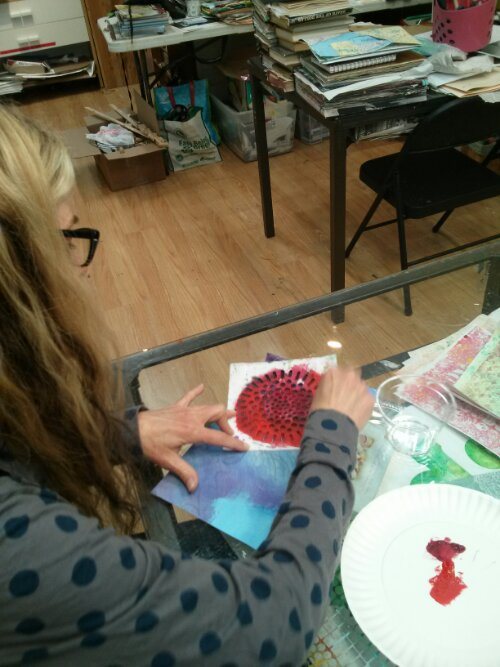
Today, I went to a book signing event at A Work of Heart Studio ttp://www.aworkofheart.com/in San Jose, CA.  Mixed media artist/author Roxanne Padgett of Acrylic Techniques in Mixed Media, discussed the techniques explored on various samples.  By playing with various techniques and materials, “your own personal style will emerge.”   Roxanne encouraged all of us to “fear no color.”

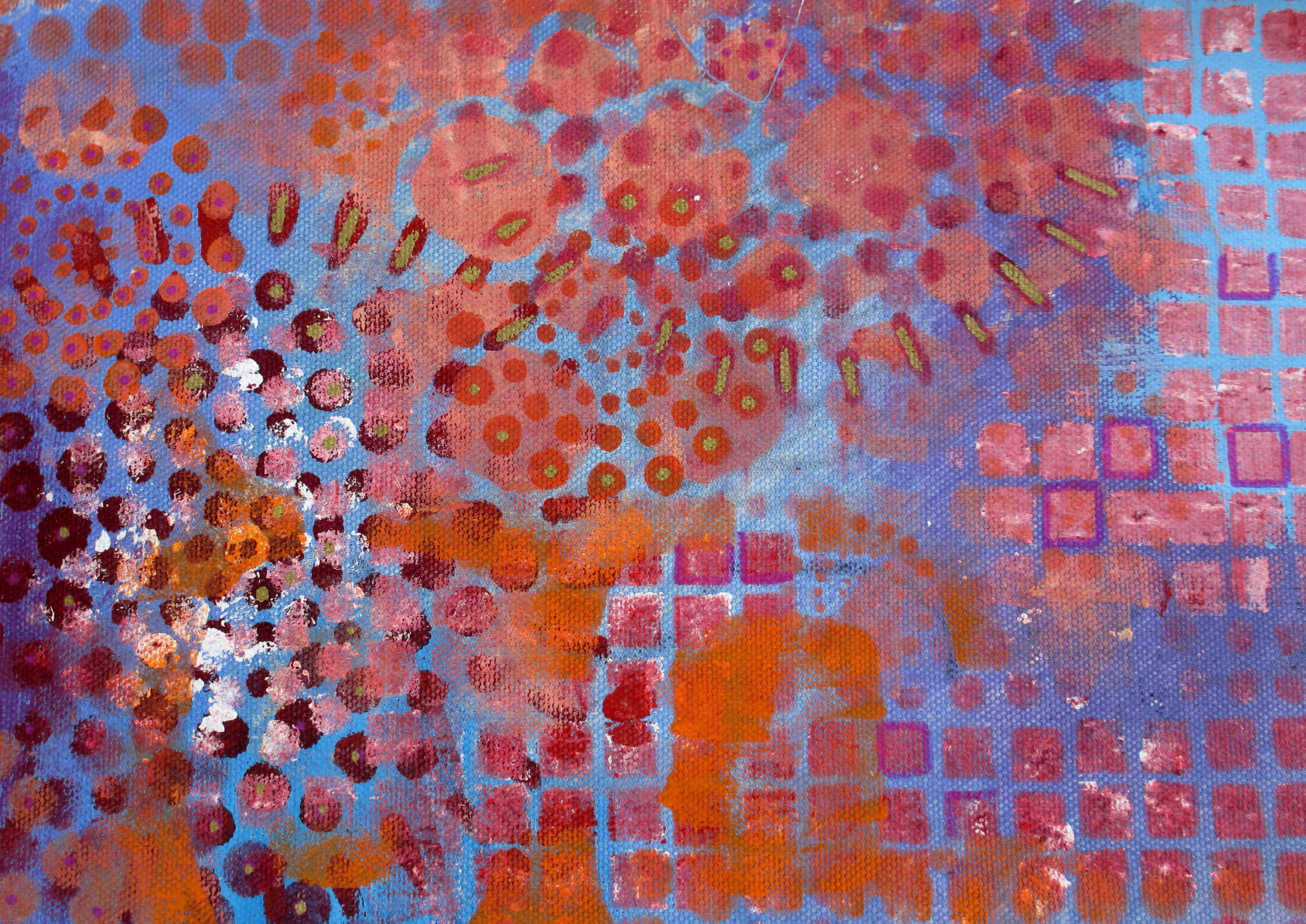
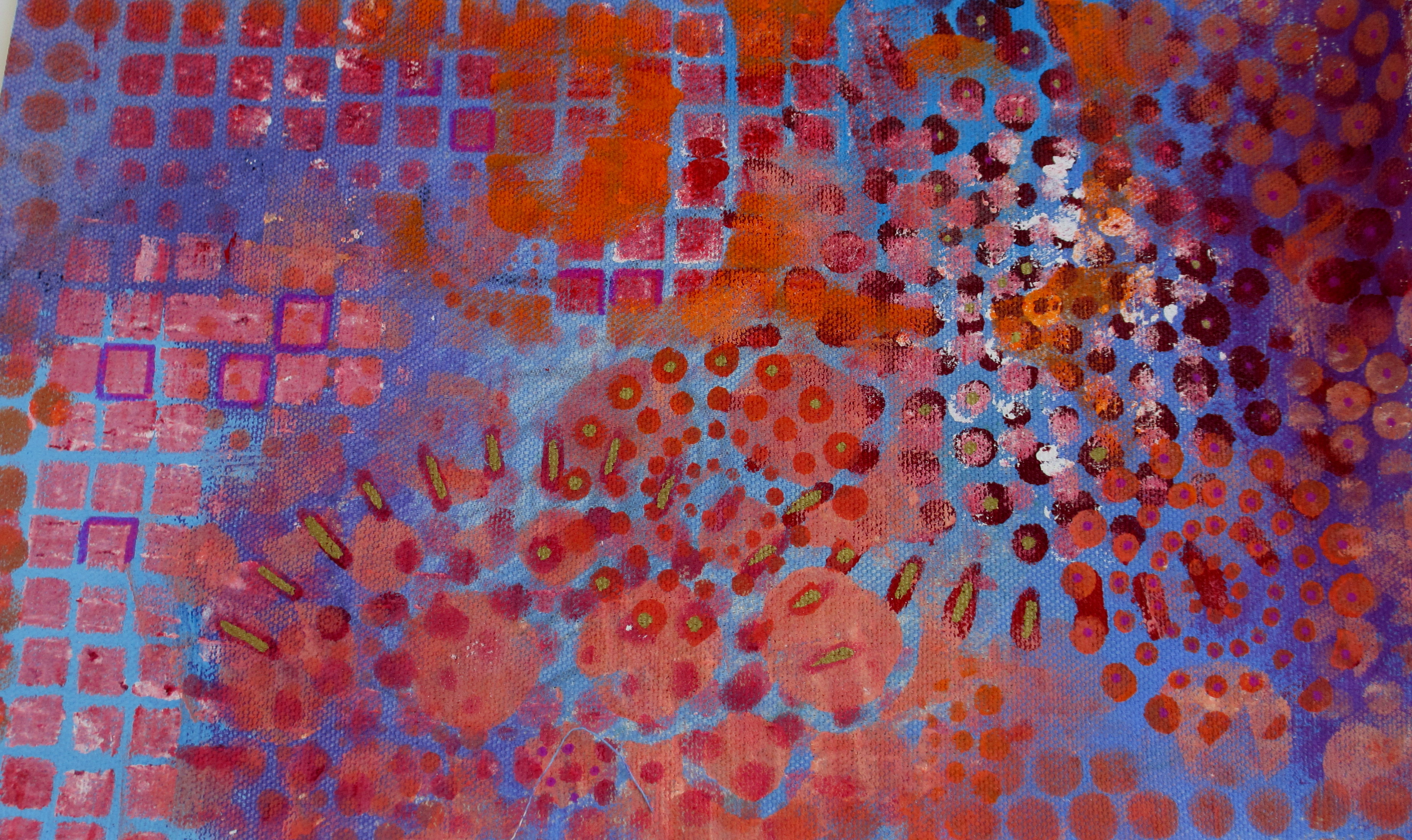
Here is my first attempt at layering and stenciling with acrylic on canvas:

Acrylic TechniquesAcrylic and Canvas

After the layering, I outlined a variety of shapes using a colored sharpie marker and a gold metallic pen.

Acrylic and Canvas #2

As I turned the sample, I noticed different shapes and patterns emerge.

Acrylic and Canvas #3

This was so much fun!

When Is A Button Not A Button?

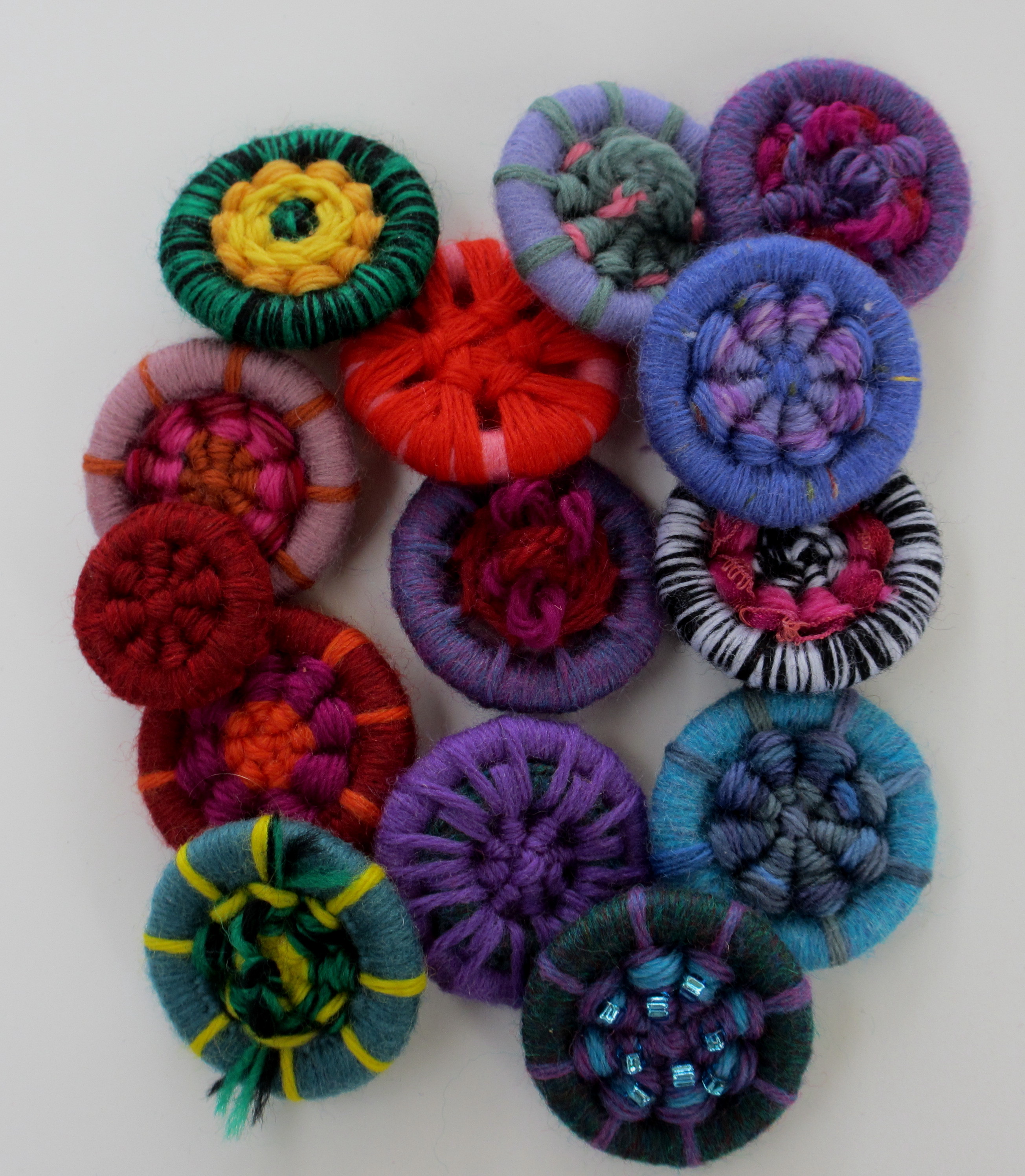
Dorset Buttons are a passion of mine, especially since the arrival of How To Make Dorset Buttons, compiled by Marion Howitt of Swanage Dorset.  The fact file offers a brief history of the Dorset button industry with clear and concise illustrations of the Dorset Crosswheel along with the Daisy Crosswheel, Singleton Buttons, High Tops, and Dorset Knobs to name a few.

Why not upcycle a traditional technique and invent your own variations?  The experimentation with color combinations and design are endless. With each round of color, I develop a rhythm which enhances my momentum of interest. Dividing the ring into spokes, stitching in a continues circular motion, spinning like a wheel symbolizes continues movement.  The continuous movement of each new object personally moves my choices into new designs and unique combinations of color.Hindu wheel

More ButtonsMore Buttons #2


Cable Knit Skirt

I’ve always wanted to wear a knit skirt.  My desire for a knit skirt brings back memories of my mother speedily working through rows and rows of triple crochet producing a neon green skirt and vest.  I wore the skirt and vest to school and definitely stood out in a crowd!

Should I risk wearing a knitted skirt?  Why not?  The Seaport Skirt designed by Kristina McGowan found in Modern Top-Down Knitting is knit in the round with Karabella Aurora 8.  A few more inches are needed to complete a stitch pattern which makes the “skirt hug in all the right places (and forgive in all the others), resulting in a fit that is flattering and comfortable.”  I hope so!

Cable Knit Skirt #2


Do You Scrumble?

I was first introduced to scrumbling in 2003, by the ever-so intriguing, Prudence Mapstone.  Immediately, I realized crochet needed to become part of my repertoire of stitches.  Further investigation uncovered The Crochet Workbook by Sylvia Cosh and James Walters, well-known crochet designers opened my worldview to Freeform.  From NSW, Australia, Jenny Dowde also explores color, texture and freeform with her scrumbling, Freeform Knitting and Crochet along with  FREEformations include many projects, I look forward to exploring.

Scrumbling/freeform swatches provide an opportunity for experimentation with different color and stitch combinations.  The “no rules” policy of freeform liberates the fiber artist from the “usual” to the “spontaneous.” Combining the culture of knitting and crochet exposes an abundance of shape and texture.

I’ve also added dorset buttons to the mix…the purse form from Japan may be purchased at Lacis Museum and Textiles http://www.lacismuseum.org/ in Berkeley, CA.  Crochet popcorns and bullion stitch are my next stitch challenges.  I’m digging through my stash for different textures of yarn for a variety of visual interest.

Do You Scrumble

Spring Is In The Air

Spring Is In The Air #3Blossoms are blooming, bees are buzzing and I need to plant my sunflower seeds.  A trekk to my my local nursery proved to be fruitful.  I found various varieties of sunflower seeds along with hollyhock and zinnia seeds.  I am excited to plant “Lemon Queen” (Helianthus annuus) a variety of sunflower grown for a multi-year bee count project to gather information about native bee populations.  More than 100,000 citizen-scientists across the U.S. and Canada participate in the research by counting the number of bees that visit their “Lemon Queen” plants.

During a bout of Spring cleaning and organizing my stash, I found a group of knitted ribbon roses. The directions for the knitted ribbon motifs can be found in the Holiday 2004 issue of Vogue Knitting.  “Nicky Epstein puts the metal to the petal with clusters of knit roses in Fonty/Russi Sales Serpentine.” The flowers are sewn together creating a piece of knitted jewelry.  For my bouquet, I knit with Anny Blatt Victoria ribbon.Spring Is In The Air #2

What should I do with my flora? Do you scrumble?

Stitches Discovered

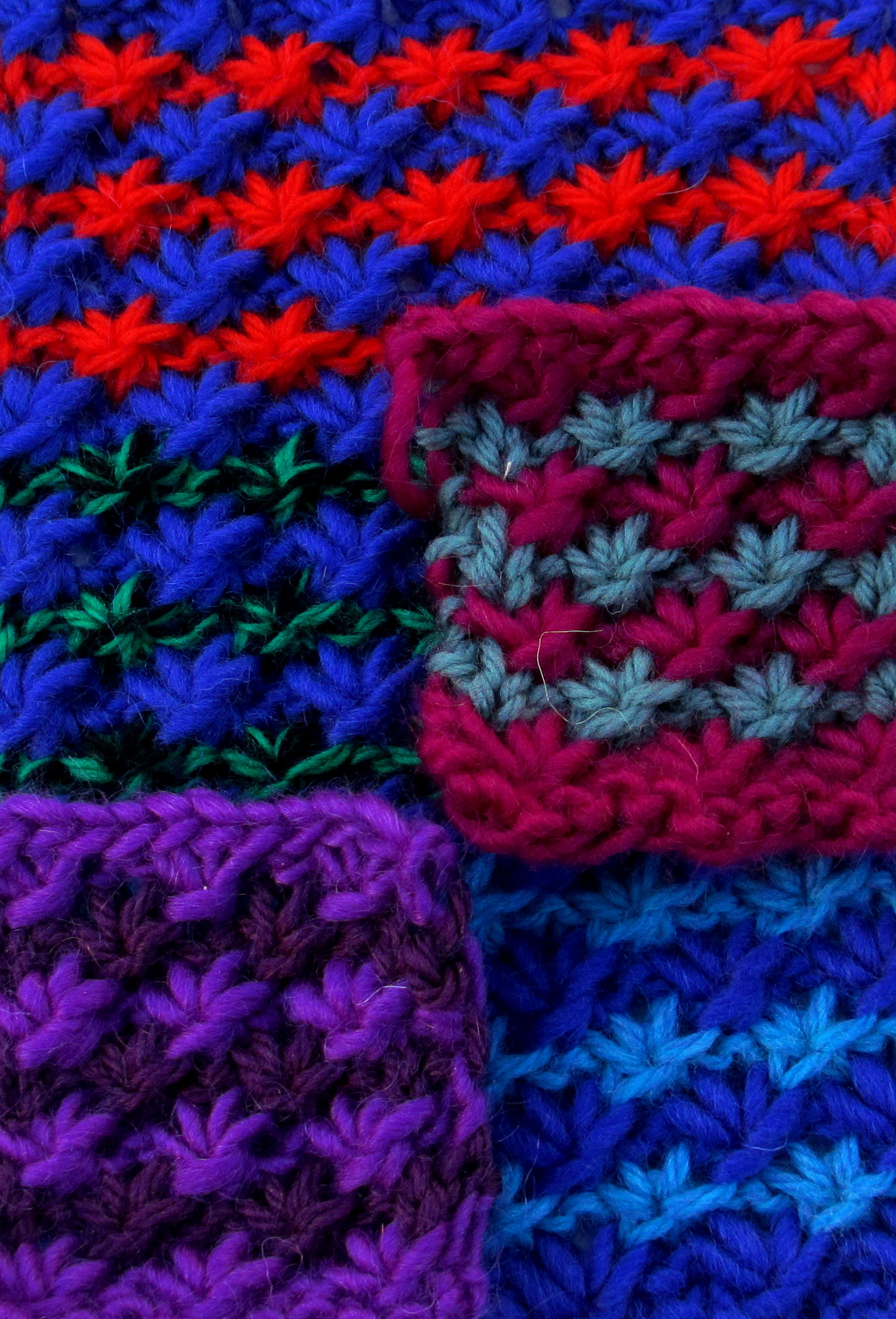
As mentioned, (see blog post Color, Pattern and Texture, dated  6/8/2012) pushing the limits of knit and purl stitches keep me awake at night.  Waking-up at 5:00 in the morning with an idea energizes my creative soul.  Last week, I discovered the Knitted Daisy Stitch/Star Stitch Pattern.

Stitches Discovered #2Stitches Discovered #4Colorwork, pattern and texture achieved using slip stitches offers a “freeform” of expression without the tangled mess of Fair Isle and Intarsia (my own personal experience).  I played around with different color combinations, manipulating swatches like building blocks in order to construct an “aesthetic knitted architecture.”

Knitted Daisy Stitch/Star Stitch Pattern:

Cast on 13 stitches (12 + 1) .  Row 1: (RS facing) Knit all stitches.  Row 2: K1, *P3 tog leave stitches on the needle, yo, P the same 3 tog again and drop them, K1; rep from * to end of row. Row 3: Knit.  Row 4: K1, P1, K1, *P3 tog leave stitches on needle, yo, P the same 3 tog again and drop them, K1; rep from *, ending last repeat with P1, K1.  These 4 rows form the pattern.  Repeat these 4 rows for desired length.

Enjoy!

“Kushu Kushu” merino & silk stainless steel scarf

I’m mesmerized by the cones of yarn from HABU textiles.  Silk stainless, paper moire, paper linen and tsumugi silk to name a few.  Kushu Kushu merino and silk stainless scarf  designed by Setsuko Torii, uses four different needle sizes which explores the effects of tension and gauge within the design. The co-mingling of the silk merino and silk stainless steel begin the scarf, while the silk stainless steel stands alone at the other end of the scarf.

The pattern  consists of a numbering system familiar to Japanese knitters.  The numbering system produces a straight-forward schematic, thus eliminating questionable interpretations associated with writtern instructions.

After knitting the scarf, I incorporated wooden beads secured with silicone rubberbands for resists,  and lightly fulled the scarf by hand.

Kushu Kushu scarfThe subtle dimensionality adds interest to the delicate appearance of the scarf.

Pool(ing) It All Together

Look what happened…

Pool(ing) It All Together #4

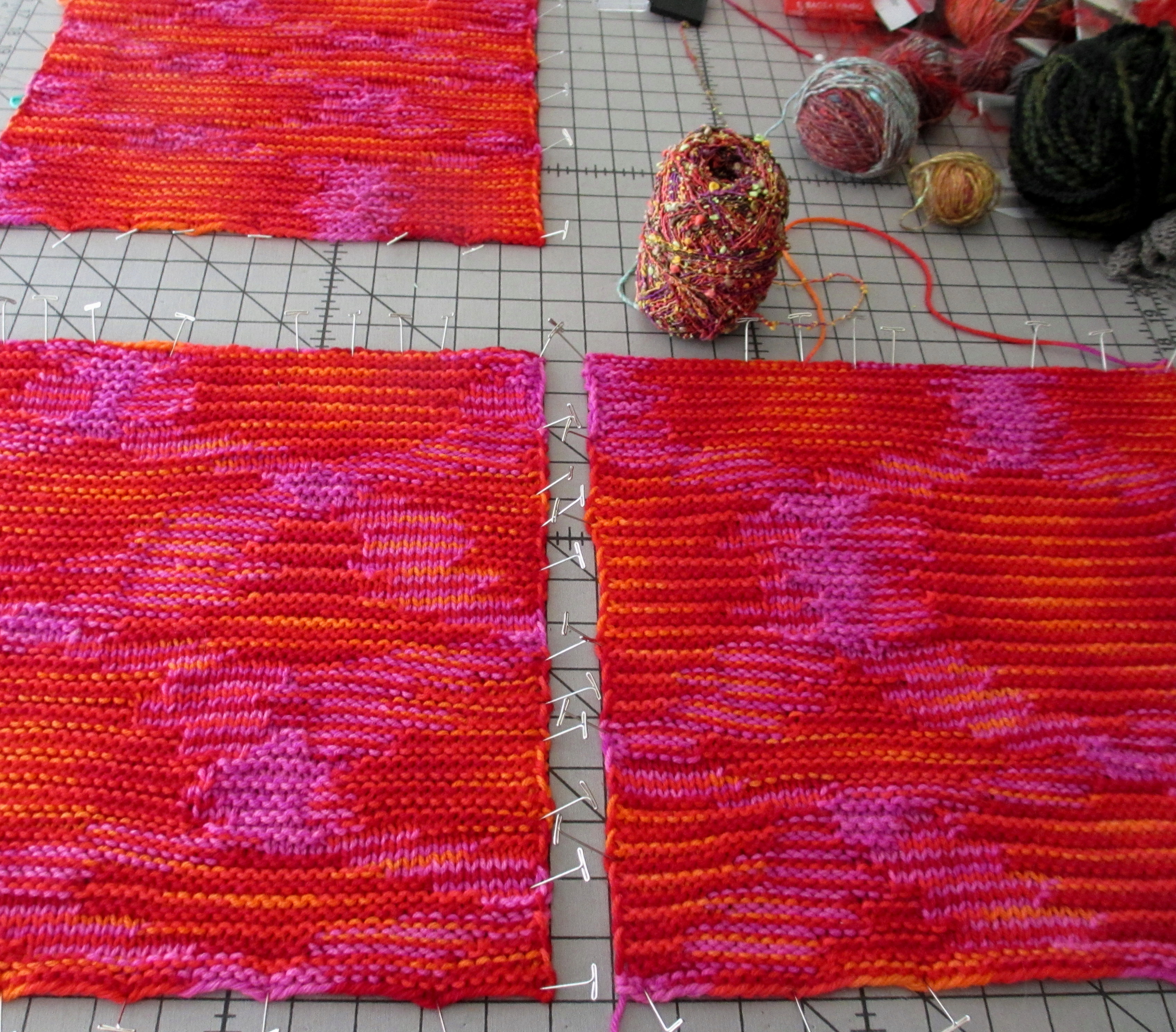
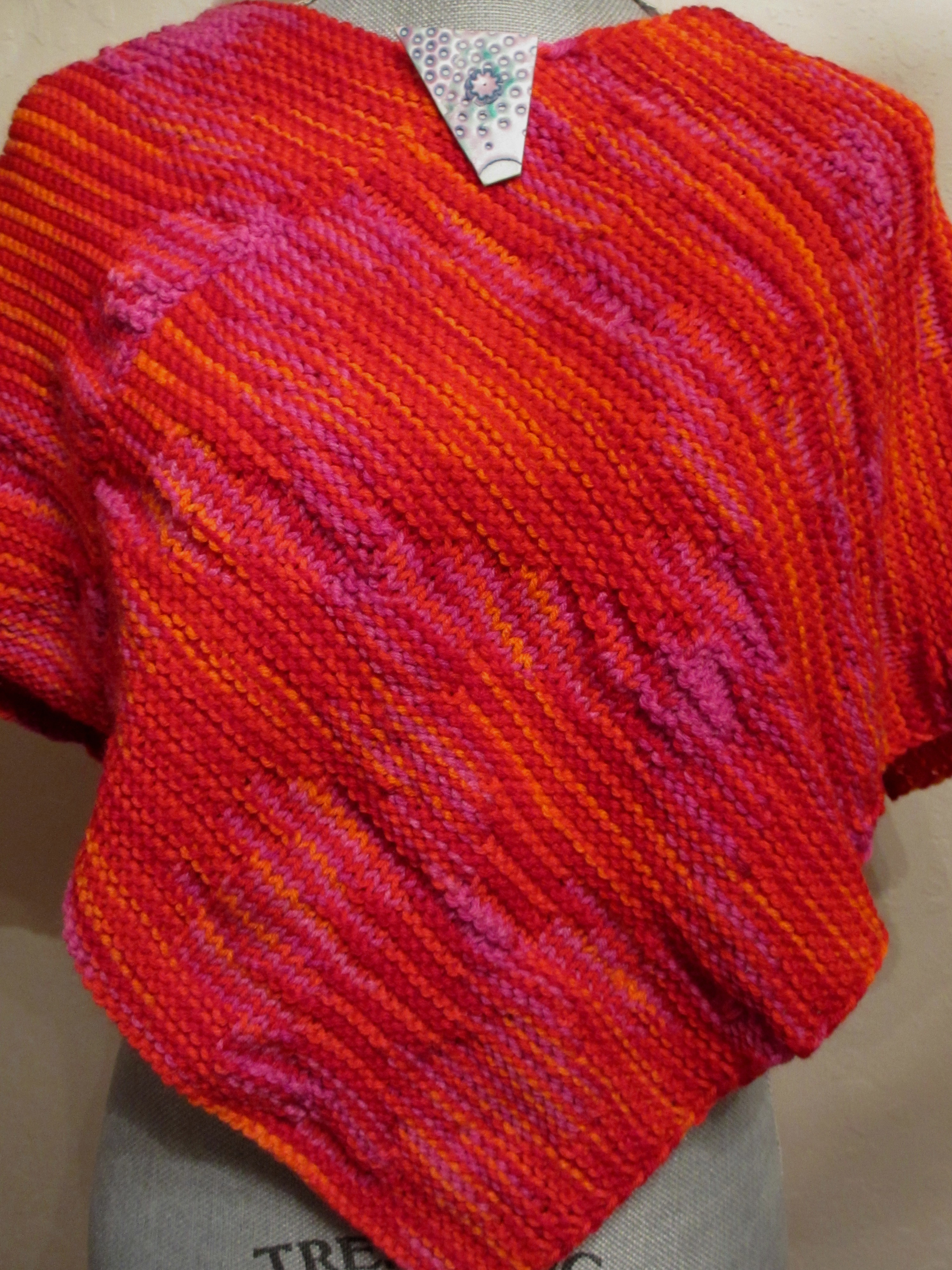
I began each square with a new skein of yarn, casting on after finding the same color repeat in different places within the skein.  Remember, my intention was not to seek perfection or precision.  (See previous blog posts)

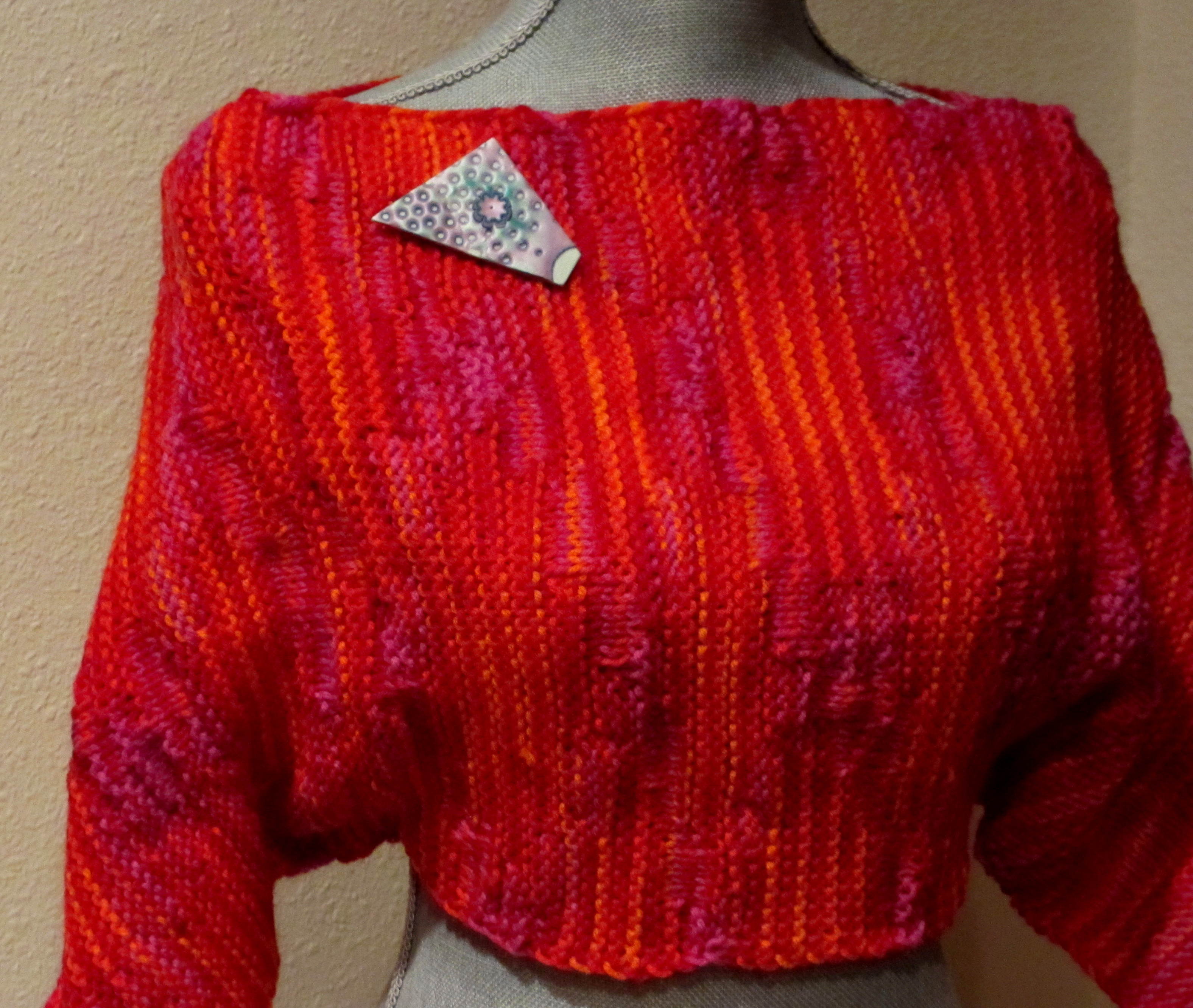
After playing around with the blocks, and the inspiration of Nicky Epstein’s, Block by Block,  four blocks were joined.   Below, are two ways the blocks may be worn.

Pool(ing) It All Together #5Pool(ing) It All Together #7